
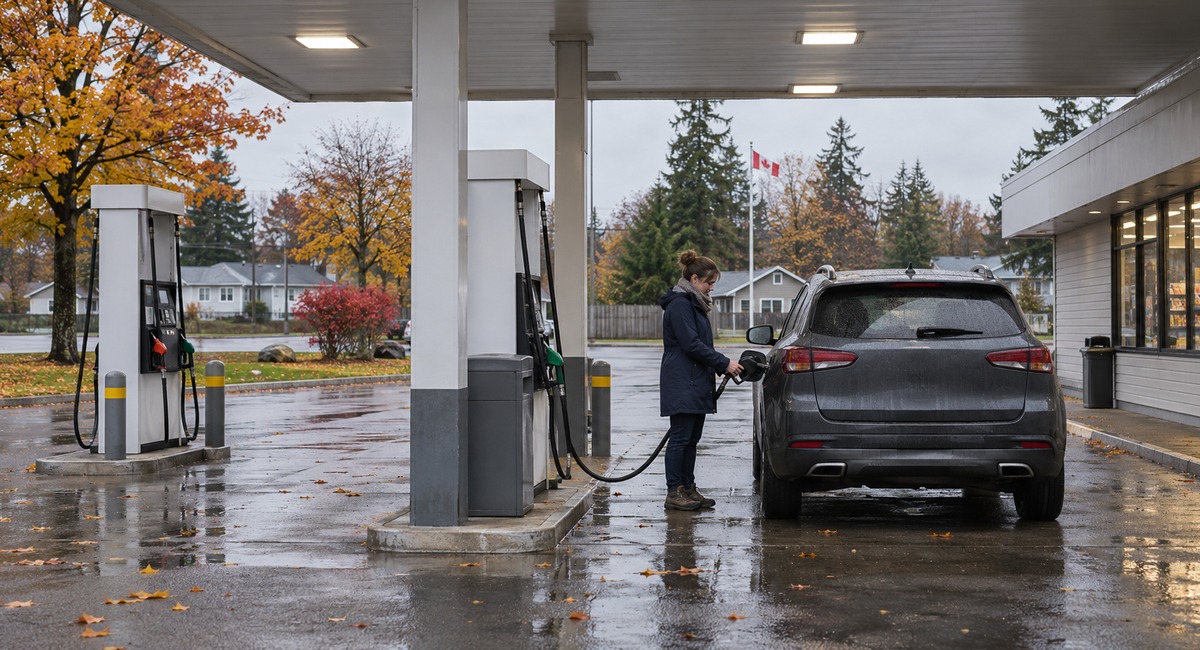
Canada’s annual consumer price inflation held at 3.1% in October, Statistics Canada reported Monday. That unchanged reading concealed some movement underneath. CPI excluding energy cooled to 2.0% from 2.1%, while gasoline prices rose 30.9% from a year earlier, up from 27.8% in September. The gap between headline and ex-energy inflation reached 1.1 percentage points, compared with a 1.0-point gap in September. October’s release allows a more precise test of how much room an energy-sensitive household needs in its monthly budget.
The all-items index rose 0.2% from September, both before and after seasonal adjustment. Gasoline fell 2.5% from September despite the larger annual increase. Statistics Canada pointed to a 4.8% monthly gasoline decline in October 2025, when crude prices were being weighed down by oversupply concerns. When that older drop fell out of the year-over-year calculation, it put upward pressure on October’s annual reading. A driver could therefore see some relief from September while remembering substantially cheaper fill-ups a year earlier.
All-items inflation exceeded the ex-energy measure by 1.1 percentage points in October. The pale band shows the Bank of Canada’s headline inflation control range of 1% to 3%.
Food and shelter still matter to the monthly budget
Grocery prices increased 2.0% from a year earlier, up from 1.7% in September. Statistics Canada reported that grocery prices were 31.9% higher than in October 2020. A slower rate of increase leaves the previous years’ higher price levels in place. That explains why a household can see a lower current inflation rate and still feel that the same grocery basket takes up considerably more of its budget.
Shelter prices rose 1.4% year over year nationally. The cost to a specific household depends on its rent terms, mortgage timing, property taxes and location. CPI excluding energy offers a useful way to isolate the effect of one group of prices. It is a separate series from the Bank of Canada’s preferred core measures, which use different methods to filter movements in prices. Any discussion about the next policy decision needs to distinguish those measures and consider the information that arrives before it.
Stress-test the bills that can force a decision
For a commuter, start with the last three months of fuel receipts and the cost of a winter fill-up pattern. For a home heated by gas, add the billing schedule and check whether equal-payment arrangements defer part of an increase. For a retiree, compare the combined outlay against available cash and income already scheduled to arrive. A household can adjust its energy assumptions while keeping the rest of the budget consistent with bills it actually pays.
Keep an ordinary spending case and a second case with higher fuel and utility costs. Identify which spending could be shifted by a month and how much extra cash each case would require. If the energy shock would force a sale of investments, revisit the timing of planned withdrawals. Update the assumptions when bills or contracts change. Add a date for checking whether the higher-cost case has actually materialized. That gives the household a way to act on October’s release without treating a national price index as a quote for the next grocery trip or heating bill.