
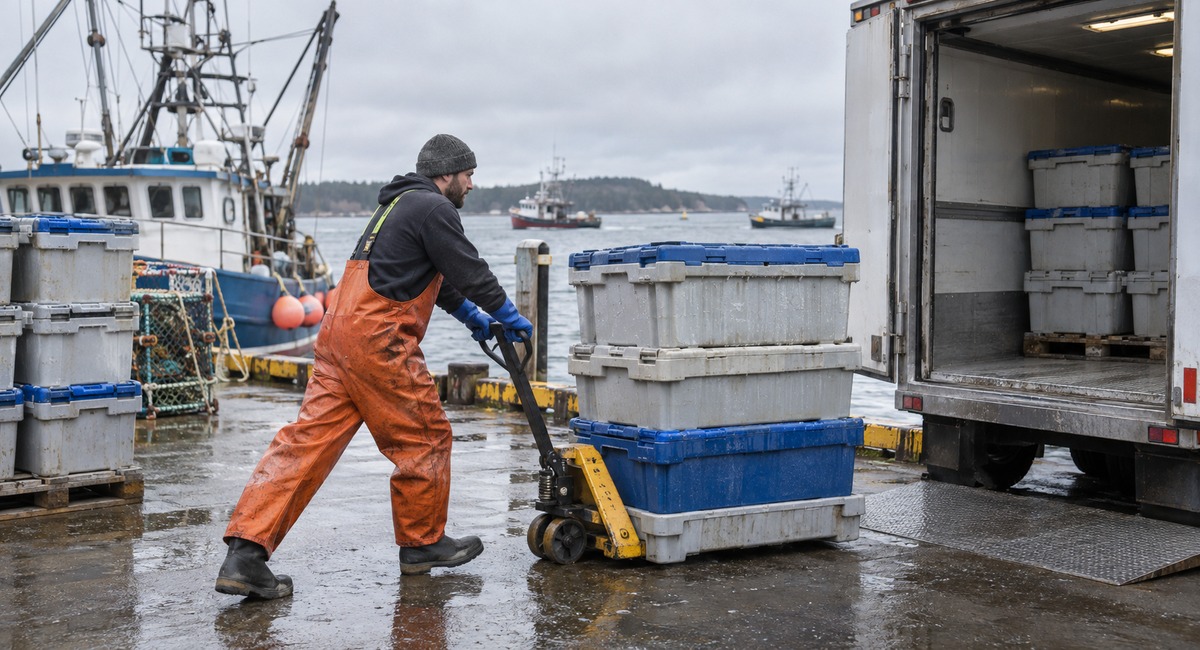
Canada and China agreed Tuesday to extend and widen their trade arrangement following a meeting between Prime Minister Mark Carney and Chinese President Xi Jinping in Shenzhen. The Canadian readout named most frozen pork cuts, Greenland halibut, some shrimp including Pacific spot prawns, and certain molluscs including geoduck and sea cucumbers. Reuters put the covered Canadian exports at about C$400 million. The Wall Street Journal reported that Canada would offer relief on certain Chinese steel and aluminum products for which domestic supply is insufficient or unavailable.
For exporters in the named categories, the opportunity is commercial and specific. A lower tariff can make a shipment more competitive or improve what a seller receives, depending on the contract and the buyer’s alternatives. The value reported for affected trade describes the merchandise in scope. Estimating the financial benefit requires the amount of the tariff change, the share that the parties retain and the number of shipments that qualify.
A useful outlet within a larger trading pattern
Statistics Canada’s September merchandise figures provide scale. Canada exported $4.448 billion to China, about 5.7% of its $78.551 billion in total exports. The United States took $55.170 billion, or about 70.2%. The figures are monthly, seasonally adjusted and measured on a balance-of-payments basis. September shipments went out before this agreement and establish a baseline for comparing trade exposure.
The merchandise balance also shows why diversification looks different at the country and company level. In September, Canada recorded a $12.333 billion surplus with the United States and a $6.983 billion deficit with other countries combined, yielding a total surplus of $5.350 billion. The chart tracks Canada’s overall balance across 25 months. Its swings provide context for the sensitivity of the national trade picture to multiple markets and products. The benefit for an individual seafood processor can still be material if the new terms improve access to a particular buyer.
Canada’s overall merchandise balance before the Shenzhen announcement. September’s $5.35 billion surplus combined a $12.33 billion U.S. surplus with a $6.98 billion deficit with the rest of the world.
Margin depends on the shipment terms
The Canadian readout names product groups. A business should confirm the tariff classification, when the customs treatment takes effect, and which party pays the duty under the contract. A buyer bearing the duty might keep the immediate benefit or offer better terms in exchange for volume. An exporter bearing it might instead see a change in landed margin. Even then, freight, cold storage and currency conversion can change the value of the concession by the time cash is collected.
A business can estimate the opportunity in stages. Start with existing orders and confirmed customs treatment. Then add a separate scenario for volume that might become viable under revised terms. Use realistic shipping and payment dates in both cases. For fresh or frozen products, delays can create working-capital needs before the first dollar of incremental revenue reaches the business.
Put the trade change beside the owner’s other risks
For an owner-manager, a better export contract can affect distributions, hiring or the timing of a capital purchase. Advisors can connect the trade opportunity to household liquidity by asking how much the family depends on withdrawals from the business during expansion. Where a new customer or country accounts for a large portion of expected growth, test what happens if orders are delayed or priced differently. The Shenzhen announcement gives the business a reason to update that forecast as buyers and customs authorities confirm the details.