
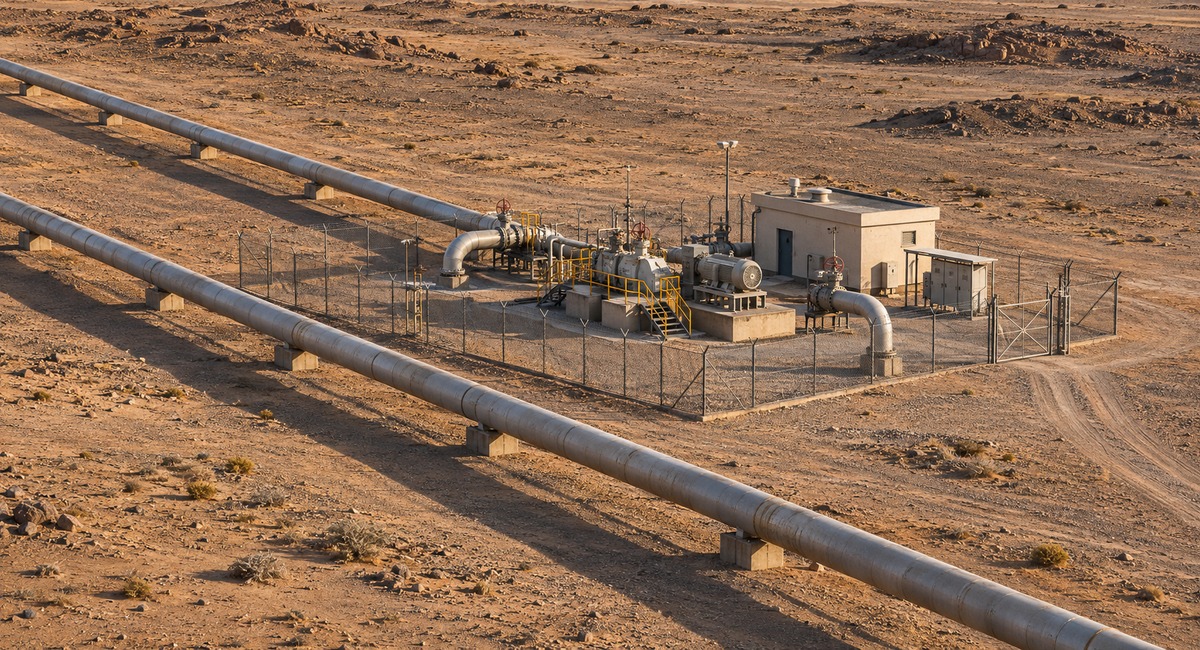
Libya's Sharara oil pipeline reopened Monday, and crude had begun to flow into storage at the Akakus facility in Zawiya, the head of Libya's National Oil Corporation told Reuters. Brent futures settled 3.46% lower at US$89.37 a barrel as traders weighed the restart alongside stronger Middle Eastern supply. The news points to a distinction that matters as the market assesses how quickly barrels are returning. A barrel that arrives through a Mediterranean outlet gives buyers a different route to supply from one that depends on stable traffic through the Gulf.
That distinction mattered in the October recovery. The International Energy Agency estimates that OPEC+ crude output rose from 35.71 million barrels a day in September to 37.72 million in October. Saudi Arabia alone added about 1.06 million. Iraq added 540,000 and Kuwait 450,000. Those three increases add up to roughly 2.05 million barrels a day before any offsets or rounding, slightly exceeding the group's net growth. In the same table several named countries produced less than the previous month. The headline shows the recovery's size. The country figures show how much it depended on a cluster of producers with exposure to disruptions in the region.
Changes are calculated from the IEA’s rounded production estimates for named countries and its remaining grouped producers. The chart excludes aggregate rows and measures output, without assigning barrels to export routes.
The restart changes the geography before it changes the volume estimate
Sharara's crude can reach the Mediterranean via Libya's coastal infrastructure. Counting that option in a buyer's supply decisions is different from assigning a daily production gain to the global balance. Crude has to reach storage, a cargo must be scheduled and loaded, and a ship has to complete its voyage. The news available Monday covered the first part of that chain. The IEA’s October estimate for all of Libya, 1.28 million barrels a day against 1.26 million in September, came weeks before the restart and cannot be used to size its effect.
Physical substitution can matter even when the volumes are modest. A buyer with access to a suitable grade and an available ship can bid on an alternative cargo. A buyer whose refinery is configured for a different blend or whose contract has stricter shipping terms may benefit less. A different route removes one source of risk and can introduce others, including another local outage or congested loading. The IEA estimates in the chart cover crude production. They do not identify how many barrels travelled through any particular port or strait.
What would make this more than a one-day headline?
A skeptical reading is that Monday's price move mostly reflected barrels already returning from the Gulf or expectations for next year's balance. Reuters reported multiple drivers and the price alone cannot identify Libya's contribution. Repeated coastal loadings, a steadier flow to storage and continued access to buyers would make the supply diversification durable. A short restart followed by another interruption would leave the basic concentration in the October comparison largely intact.
For Canadian producers and investors the distinction is most useful as an assumption in a cash forecast. A lower Brent price can coexist with a narrower or wider discount for a Canadian grade, shifts in pipeline economics and a changing Canadian dollar. Put the benchmark, realized differential and currency on separate lines. An operator with fixed transport commitments and near-term debt service will care about the price received on committed barrels. A diversified investor may want to know whether the holding earns money chiefly from producing crude, transporting it or processing it. Those channels can react differently to the same headline.
By the next oil balance update, Mediterranean loadings and Gulf export volumes offer two checks on a recovery that so far owes much to a small group of producers. If both routes keep delivering, buyers have more flexibility. If one fades, the monthly production total can remain elevated for a while even as the number of dependable options shrinks.