
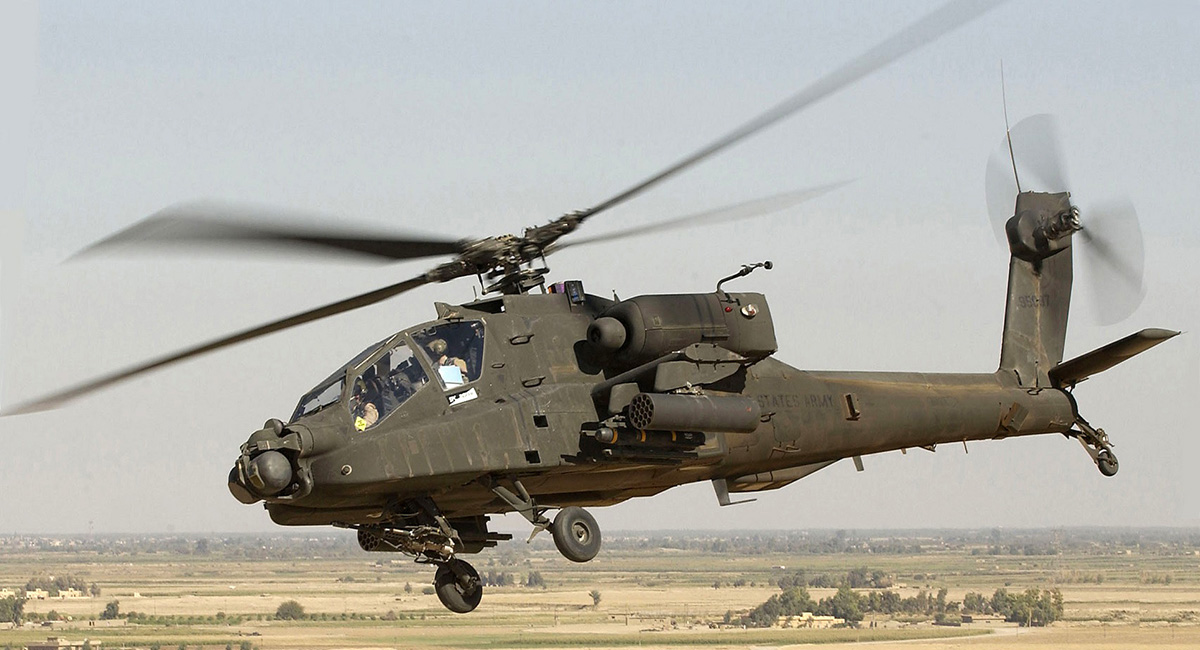
A US Army Apache attack helicopter crashed near the Strait of Hormuz this morning. President Trump confirmed both crew members were rescued and uninjured. The cause is unknown. Iran's Revolutionary Guard had not issued a statement as of early Tuesday. Iranian state media acknowledged the incident without elaborating.
The crash is the latest friction point in a ceasefire framework that has not produced a permanent agreement in the two months since it was established. Israel and Iran exchanged direct strikes Sunday night, the first since April 8. Both sides stepped back by Monday afternoon. Oil spiked above $94 at the open Monday and retreated to near $89 by Monday's close as the partial de-escalation became clear.
Why the Strait Remains Closed Despite the Ceasefire
The April 8 ceasefire was conditional on Iran allowing shipping through the Strait of Hormuz. In practice, almost no commercial traffic has used the strait since February 28. The US Navy established a counter-blockade of Iranian ports on April 13 after Islamabad talks failed. Iran responded by reimposing restrictions. The result, which the UK House of Commons Library described as a "dual blockade," has left hundreds of tankers stranded or rerouted and effectively removed approximately 20% of global seaborne oil supply from normal circulation.
When passage has been permitted, Iran has charged transit fees exceeding $1 million per vessel, which shipping associations have called a departure from international maritime norms. Trump has repeatedly threatened renewed strikes on Iranian infrastructure if the fees continue. Iran's parliament speaker Ghalibaf said Monday that Trump's negotiating position "contradicts the agreed-upon sections" of the ceasefire framework, indicating that the gap between the two sides on what the deal actually requires remains wide.
The channel through which this affects Canadian portfolios is straightforward. The Hormuz closure has removed Persian Gulf crude from global supply. Canadian energy producers, concentrated in Alberta's oil sands, are outside the zone of supply disruption and have full access to elevated world prices. WCS crude rose from approximately $50 per barrel before the conflict to above $90. The TSX energy sub-index has gained 66% over the past twelve months, driving the TSX Composite's outperformance of most global developed market peers.
WTI rose from $64 per barrel before the February 28 conflict to above $103 in late April before retreating to near $89 as ceasefire talks periodically improved sentiment. The April 8 ceasefire produced a sharp pullback; the June 7-8 exchange between Israel and Iran briefly pushed the price back above $94. The $90 support level has held as a floor through the ceasefire period.
The Trade the TSX Has Priced, and What Unwinds It
The IEEFA published analysis this week quantifying the Canadian energy windfall from the Hormuz closure. WCS rose from approximately $50 to above $90 per barrel, nearly 80%. WTI rose from $64 to a peak above $103 before settling near current levels. The TSX energy sub-index has tracked those price moves closely, and the broader TSX has outperformed most developed market peers over the same period precisely because of its energy and materials composition.
The asymmetric risk now runs in the direction that clients are least likely to be worried about. A further escalation from current levels, say another exchange of strikes or a US strike on Iranian energy infrastructure, would likely add $5 to $10 to WTI on a temporary basis. Barclays research cited in the IEEFA analysis estimates that a full Hormuz reopening would return roughly 14 million barrels per day of supply. Applied to current demand, that implies a supply-demand realignment that would push WTI materially lower, potentially toward the $70 to $75 range that J.P. Morgan cited in its longer-term forecast.
Bob Parker of the International Capital Markets Association, writing for CNBC last week, estimated that even a partial Hormuz reopening would push oil toward $90 per barrel by year end because of the infrastructure damage, inventory depletion, and security risk premium that would persist even after a deal. That is the base case for a peace scenario: a significant but not catastrophic decline from current levels. The tail risk for Canadian energy portfolios is a comprehensive deal with rapid reopening and swift inventory rebuild, a scenario that markets would price in well before tankers actually start moving.
The helicopter crash this morning and the fragility of the ceasefire framework suggest the deal risk is not imminent. But it is closer than it was in April, and the negotiating dynamic has shifted. Trump has said he may have an idea for a deal within days. Iran's foreign affairs apparatus has said it has no problem with negotiations provided the US demonstrates good faith. The crash complicates that signalling on both sides.