
The announcement came Sunday evening. US President Donald Trump posted that the deal with the Islamic Republic of Iran was complete. Iran's deputy Foreign Minister Kazem Gharibabadi confirmed the text of the memorandum of understanding to Iranian media. Qatar's Prime Minister Sheikh Mohammed bin Abdulrahman Al Thani welcomed it as an important step toward sustainable peace. A formal signing ceremony is scheduled for Friday in Switzerland.
By every credible measure, this is a genuine breakthrough. It is also an incomplete one, and the distinction matters for Canadian portfolios more than the headline suggests.
What the MOU Actually Covers
The agreement, as reported by NPR, Axios, and Al Jazeera, extends the current US-Iran ceasefire for sixty days. It includes commitments to restore shipping through the Strait of Hormuz, lift the US naval blockade, and provide sanctions relief for Iran if Tehran complies with its obligations. Iran's nuclear program is explicitly deferred: it will be the subject of separate negotiations during the sixty-day window, with Iran understood to have committed to forgo developing nuclear weapons in the final deal framework.
What the MOU does not include is resolution. The nuclear question is the central unresolved issue that has driven US-Iran tensions for two decades. Deferring it to sixty days of subsequent talks is the diplomatic equivalent of buying time. The deal is best understood as a structured pause that creates the conditions for a final settlement rather than the settlement itself.
CNBC reported that US Vice President JD Vance, just days before the announcement, stated that fake information was circulating about a deal and that Iran would not receive cash simply for signing. Qatar's role as a facilitator and the Hezbollah complication in Lebanon, which nearly derailed the agreement on Sunday, indicate the regional architecture around this deal is fragile. The sixty-day window will be tested.
The Hormuz Timeline
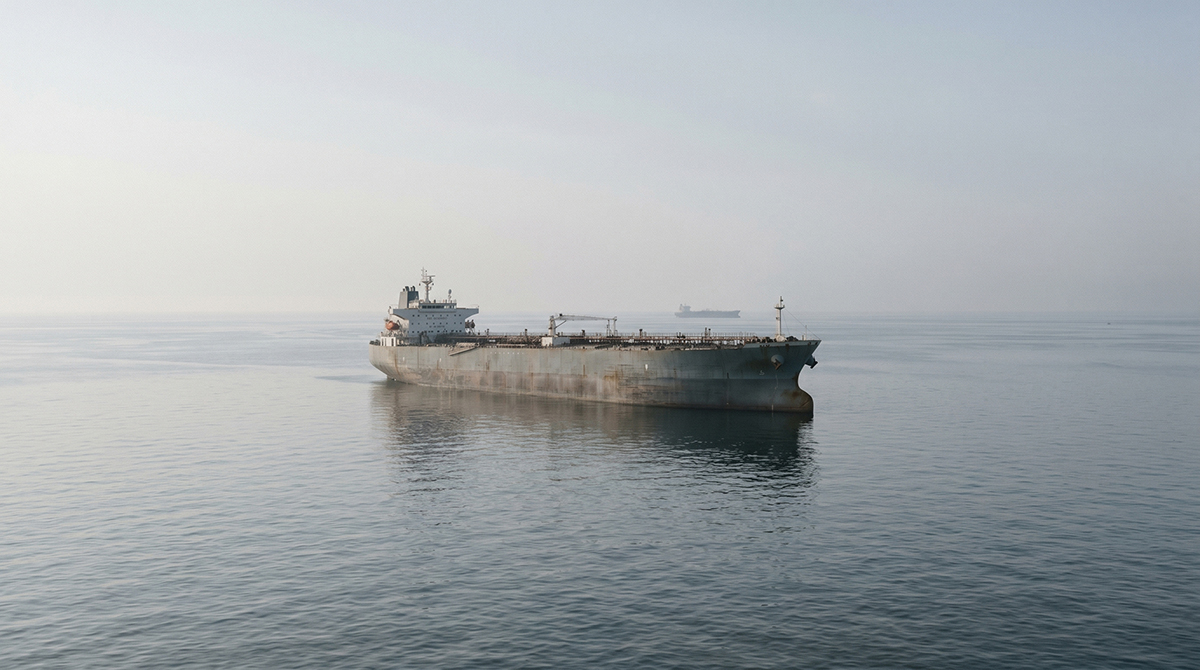
The chain of consequence from MOU to normalized Hormuz traffic runs through several steps, none of which are instantaneous. The United States and allied navies will need to clear mines laid during the conflict period. Inspection protocols for commercial shipping will need to be established and agreed to by Iran. Middle East oil producers, including Saudi Arabia and UAE, whose fields were curtailed or whose export infrastructure was affected by the conflict, will need weeks to assess damage and begin ramping production. The EIA's most recent Short-Term Energy Outlook, published in early June with the assumption that the Strait remained closed, projected that oil shipments through the strait would resume in Q3 2026 but would not reach pre-conflict traffic levels until early 2027.
Fitch Ratings estimated in early June that Brent crude could average $87 per barrel for the full year of 2026, even in a Hormuz reopening scenario. The arithmetic behind that figure: a deal announced mid-June, a signing on June 19, mine clearing through late June, partial traffic resumption in July, ramp-up through Q3. The market is pricing that path. WTI at $80 this morning reflects a deal premium being partially priced out, but not a return to the $68 pre-conflict equilibrium.
Brent crude peaked near $115 in early April before declining as ceasefire optimism built through May and June. The shaded red area represents the residual war premium still embedded in the price: at $83.50 Monday morning, Brent remains roughly $11 above its pre-conflict level, reflecting the market's assessment that full normalization is months away. The deal announcement is visible in the green-shaded zone at right, but the price has not returned to pre-conflict levels.
The Canadian Energy Sector Calculus at $80 WTI
Canadian oil sands producers, the backbone of TSX energy sector exposure, have break-even costs that vary by producer and project vintage. Suncor Energy, Canadian Natural Resources, and Cenovus operate integrated businesses with downstream refining that provides partial hedges against crude price swings, but their upstream economics are still sensitive to the WTI price. The Canadian heavy oil differential, the discount at which Western Canada Select trades relative to WTI, adds a further consideration: WCS typically trades at a $10 to $20 discount to WTI, placing the effective wellhead price for Alberta production closer to $60 to $70 per barrel at current WTI levels.
At $110 WTI, Canadian energy producers were generating exceptional free cash flow. At $80 WTI with a $15 WCS differential, the cash flow picture is materially different. It is not distressed: most major Canadian producers reduced their break-even costs during the 2014-2020 restructuring cycle and can sustain operations profitably at $65 WTI or below. But the excess return that drove TSX energy outperformance through the conflict period evaporates at these levels.
The relevant question for portfolios is not whether Canadian energy is viable at $80 WTI. It is whether the war premium that drove the TSX energy sub-index higher since February has been fully priced out, or whether there is more to come as the Hormuz reopening timeline becomes clearer. The residual Brent premium of approximately $11 above pre-conflict levels suggests the market believes there is still uncertainty to price. That uncertainty, and its eventual resolution, is what will determine whether the energy reversal today is a one-day event or the beginning of a multi-week rotation.
The Sixty-Day Clock and Its Tail Risks
The most important number in the deal is not the oil price. It is sixty days. The ceasefire extension runs through mid-August. The nuclear negotiations must produce an agreement, or at minimum a credible framework for one, within that window. If talks stall, the parties return to the pre-deal dynamic with a fully armed Iranian nuclear posture and a US that has already demonstrated willingness to conduct military strikes.
The tail risk is not hypothetical. The Hezbollah complication on Sunday, which nearly derailed the announcement, is a reminder that the regional architecture around the deal is load-bearing in ways the headline does not convey. Lebanon, where Hezbollah remains active and where Israeli military operations continued through the weekend, is a separate conflict with its own escalation dynamics. A significant Hezbollah incident during the sixty-day window could fracture the deal without either the US or Iran formally withdrawing from it.
Canadian portfolios that held energy overweights through the conflict, and that are now watching those positions reverse, are navigating not just a price move but a probability distribution. The deal is real. The outcome of the sixty-day window is not.