
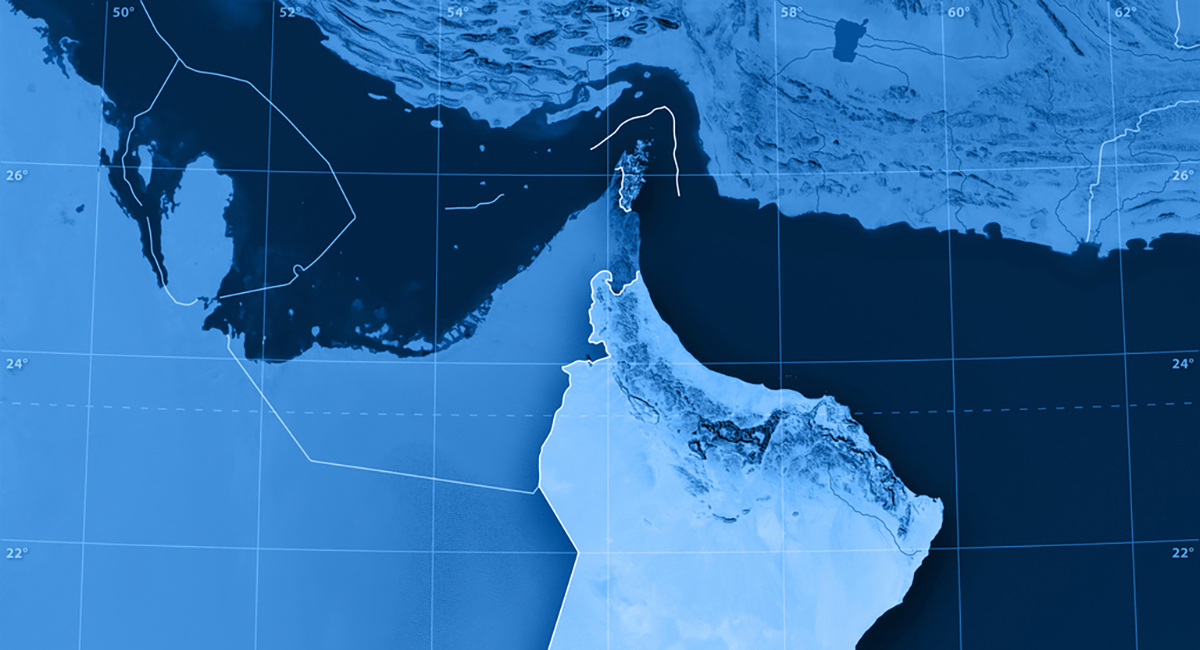
Iran said Saturday it had closed the Strait of Hormuz to shipping again, accusing Israel of violating the memorandum of understanding it signed with the United States on June 17 by continuing strikes in Lebanon. It is the same claim, in substance, that Iran has made repeatedly since the conflict began in late February. This time, Brent crude barely moved, closing at 81.00 dollars a barrel Sunday and 78.80 dollars Monday morning, well within the range it has traded for the past week.
That muted reaction is the story. The same closure claim produced sharp single day spikes in March and April. By this weekend, the market had physical evidence on its side that the rhetoric did not match: nearly 10 million barrels of crude were observed transiting or positioned near the strait the preceding Thursday, including the first Saudi owned tankers to move since the conflict began, and the US Central Command had already lifted restrictions on traffic to and from Iranian ports. Kuwait had announced it would increase production. The tape, in other words, had stopped taking Iran's word for it.
The Chain From Geneva to the TSX Energy Sub-Index
The mechanism that connects a Swiss negotiating table to a Calgary head office is direct. Canadian Natural Resources, Suncor, Cenovus and Imperial Oil all realize prices tied closely to global benchmarks, and the same war premium that lifted Brent above 120 dollars a barrel earlier this year lifted the realized prices and cash flow assumptions behind every one of those companies' 2026 guidance. As that premium unwinds, the operations do not change. The price assumption underneath the valuation does. Goldman Sachs' decision to cut its fourth quarter Brent forecast to 80 dollars from 90 is the analyst side version of the same repricing, built on an expectation that Gulf exports normalize a full month sooner than the bank had assumed as recently as last quarter.
This is a re-rating, not a collapse. Brent above 100 dollars a barrel was itself a war premium layered on top of a oil market that EIA forecasts already expect to see demand contract by roughly 1.1 million barrels a day over the course of 2026. A return toward 78 to 80 dollars removes the premium while leaving the underlying demand picture, already soft, exactly where it was. For Canadian energy investors, the relevant question is no longer whether the premium unwinds. It increasingly is whether each producer's 2026 capital plans were built on the premium holding longer than it has.
Base Case Versus Tail Risk
The base case, reflected in Goldman's forecast and in the market's shrug at Saturday's claim, is that the 60 day roadmap announced by Qatar and Pakistan after this weekend's talks in Switzerland holds, that the de-confliction cell agreed for Lebanon reduces the frequency of exactly the kind of incident that triggered Iran's latest claim, and that Gulf supply continues normalizing through the summer.
The tail risk runs through Lebanon, not through the nuclear file. Israel has said explicitly it is not bound by the US Iran ceasefire agreement, and fighting between Israel and Hezbollah continued through the weekend despite a stated truce, with dozens of Lebanese civilians killed in strikes over recent days. Iran has told mediators that Lebanon, not Hormuz and not its nuclear program, is the issue it considers unresolved. A second tail risk sits on the US side of the table: Senator Lindsey Graham said this week that if Iran contests US control of the strait, the United States intends to run it and charge a toll for passage, a structural change to who controls a global chokepoint that would persist regardless of how the Iran talks themselves resolve.
Brent's slide from above 100 dollars in late May to under 79 dollars today has continued through this weekend's closure claim almost without interruption, which is itself the clearest signal of how little new information that specific claim carried.
Daily Brent settlement prices, May 22 to June 22, 2026. The shaded period covers the memorandum of understanding signing, the renewed Hormuz claim and the resumed Switzerland talks. Source: Investing.com historical futures data.
What Advisors Should Watch Next
The technical talks in Switzerland are scheduled to continue through the week, with a high level committee now in place to oversee the broader mediation process. Nothing about the 60 day roadmap requires a clean, linear path to a final deal, and another Hormuz claim or another flare up in Lebanon before the window closes would not be a surprise. What would be a surprise, on the evidence of this weekend, is the market reacting to the next one as sharply as it reacted to the first.
For Canadian portfolios with energy sector exposure, the practical implication is less about the next headline and more about whether producer guidance and dividend coverage assumptions have caught up to an 80 dollar world rather than a 100 dollar one.