
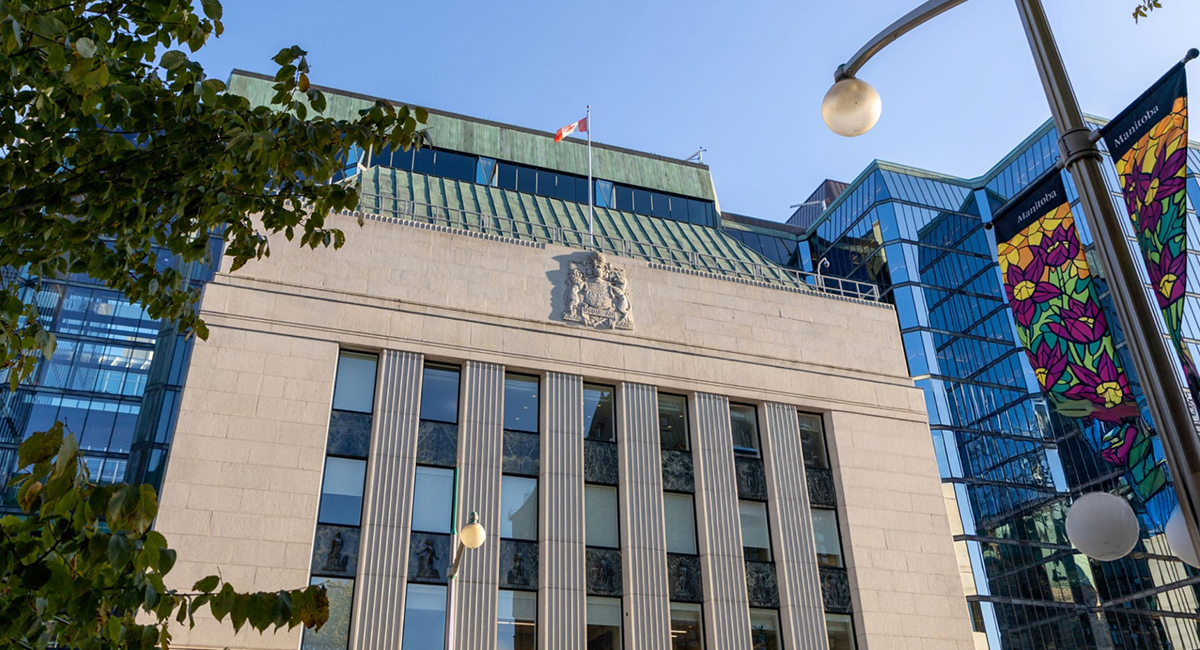
The Bank of Canada held its policy rate at 2.25 percent on June 10, the fifth consecutive hold and a decision Governor Tiff Macklem framed in unusually direct terms. Economic weakness and rising inflation, he said, present a genuine dilemma: raising rates risks slowing an already soft economy, while cutting risks letting energy driven inflation take hold. For now, the Bank chose to do neither.
A week later, the Federal Reserve under new Chair Kevin Warsh held its own rate at 3.50 to 3.75 percent, but the message inside the decision pointed a different way. The June dot plot showed most FOMC participants now expect at least one rate increase before the end of 2026, a reversal from the cuts the committee had projected as recently as March. Warsh declined to offer his own projection, a deliberate break from his predecessor's practice, but the committee's collective lean was unambiguous.
Two central banks, facing a common shock from the same conflict, are arriving at different policy postures. That divergence, not either decision in isolation, is what matters for the second half of 2026.
The Same Shock, Read Two Ways
Both economies are absorbing the same oil price shock from the Strait of Hormuz disruption that began in late February. The Bank of Canada's own statement put the scale plainly: oil prices have run roughly 10 US dollars a barrel above its April Monetary Policy Report assumptions, lifting Canadian CPI inflation to 2.8 percent in April with a further climb to an estimated 3.2 percent in May.
The Bank's read on that shock is that it is a level shift in energy costs, not a sign of broadening inflation. Macklem's June statement noted core inflation measures have moved down to around 2 percent and the share of CPI components rising faster than 3 percent remains close to its historical average. The Bank's response is to look through the headline number while watching closely for signs of pass through, a position that supports a hold rather than a hike.
The Fed's read on the same global shock, filtered through a US economy that the Bank of Canada itself describes as growing solidly on consumption and AI related investment, is less forgiving. A US economy with less domestic slack to absorb an energy cost increase is more exposed to that increase showing up as the kind of broad based inflation the Bank of Canada says it has not yet seen in Canada.
What a New Fed Chair Changes
Kevin Warsh's first meeting as chair was, by design, light on forward guidance. He has been openly skeptical of the practice, and his June press conference emphasized data dependence over a stated path. But the dot plot speaks independently of what the chair says out loud, and seventeen of thirty two former Fed officials and staff surveyed by Duke University ahead of the meeting said a 2026 increase would likely be appropriate, against fourteen who said none was warranted.
That is not a Fed that has decided to hike. It is a Fed where the median expectation has moved from two cuts in March to a live debate about a hike by June, a swing large enough on its own to widen the gap with a Bank of Canada that has not moved its policy rate since early in the year and has signalled no urgency to.
Where the Divergence Shows Up First
The Canadian dollar is the most direct transmission channel. USD/CAD touched 1.4212 on June 23, a seven month low for the loonie, as the dollar index broke above the 100 level on Fed hawkishness even as the oil shock that had been supporting commodity currencies continued to unwind. A Bank of Canada on hold and a Fed leaning toward a hike is close to the textbook setup for sustained CAD softness, independent of anything happening in the oil market specifically.
Government of Canada bond yields tell a related but distinct story. The 5 year GoC yield has eased back to around 3.0 to 3.05 percent after touching 3.20 percent in early June, as the easing of the Hormuz risk premium pulled the inflation expectation component of the yield down even as the policy rate expectation component stayed anchored to the Bank's hold. The two yield drivers are currently working in opposite directions, which is part of why the yield has been choppy rather than trending cleanly either way.
The Path That Resolves the Dilemma
Macklem's own framing offers the cleanest read on what would move the Bank off hold in either direction. A significant new round of US tariffs against Canada would push toward a cut, since trade disruption hits growth directly. Energy prices staying elevated long enough to broaden into core inflation would push toward a hike. Neither condition has been met as of this week, which is precisely why the Bank's July 15 Monetary Policy Report, rather than this week's data, is the next point where the calculus could genuinely shift.
The Fed's path is less tied to a single named trigger and more tied to the pace at which US inflation data over the summer either confirms or undercuts the hawkish lean in the June dot plot. If Warsh's first hike comes before the Bank of Canada moves at all, the divergence this article describes becomes the dominant driver of CAD weakness through the back half of the year, displacing oil as the primary story for the currency.
Fed funds rate shown as upper bound of target range. The June reading reflects the median of Chair Warsh's first dot plot rather than a confirmed move. The Bank of Canada has not changed its rate since April.