
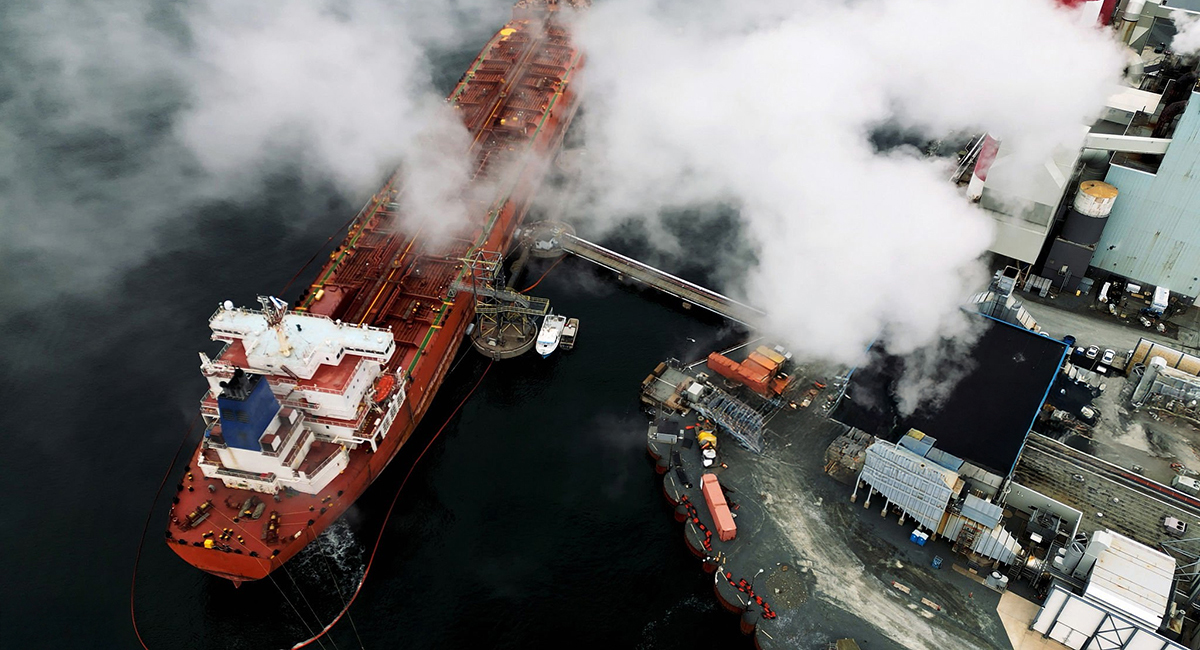
The Islamic Revolutionary Guard Corps struck three commercial vessels in and near the Strait of Hormuz this week, one of them a fully laden Qatari LNG carrier. Within hours, the US Treasury's Office of Foreign Assets Control revoked General License X, the authorization that had allowed Iran to sell oil under last month's memorandum of understanding. WTI jumped more than 5% to $74.35. The more important question for Canadian portfolios is not Wednesday's price move but whether the truce between Washington and Tehran still exists.
What Actually Happened
General License X was issued June 21, four days after the US and Iran signed their memorandum of understanding, and it permitted Iran to produce, sell, and deliver crude oil and petrochemical products through August 21. UKMTO, the British navy-affiliated maritime monitor, reported the tanker strikes this week, and a US-led naval coalition raised the threat level to shipping crossing the Strait to severe. The Treasury's response replaced General License X with a narrower authorization, General License X1, which permits no new Iranian oil transactions after July 7 and allows only a wind-down window through July 17 for deals already in progress, with proceeds routed into a blocked, interest-bearing account.
A US official told CBS News that Iran's actions in the Strait were wholly unacceptable and would be met with consequences, while adding that negotiators continue working in good faith toward a final agreement. Iran's Deputy Foreign Minister, Kazem Gharibabadi, called the licence revocation a violation of the memorandum and said Iran would take decisive action to safeguard its national interests.
The Chain: From a Treasury Filing to the TSX Energy Desk
The mechanism connecting this week's sanctions action to Canadian portfolios is direct and fast. Oil had spent the past two weeks falling toward pre-conflict levels as Hormuz traffic recovered, the United Arab Emirates fully restored its shipping flows, and OPEC+ approved another output increase for August. Saudi Aramco had just cut its Arab Light price for Asian buyers to a discount for only the third time in company history, alongside the 2020 and 2015 price wars, a signal of how confident the market had become in a sustained supply recovery.
Wednesday's news reversed that trend in a single session. WTI's jump to $74.35 flows through to Canadian energy producers almost immediately: Canadian Natural Resources, Cenovus, Suncor, and Imperial Oil all carry direct exposure to the WTI benchmark, and the TSX energy sub-index moves with it. That is the fast half of the chain. The slower half is what this signals about the durability of the supply recovery the market had spent two weeks pricing in.
Base Case Versus Tail Risk
The base case, supported by the structure of the US response itself, is that this is a calibrated escalation rather than a rupture. General License X1's wind-down window and the US official's statement that negotiators remain engaged both point toward a sanctions snapback designed to punish specific behaviour while keeping the broader framework alive. Iran has responded with strong language before without abandoning the memorandum entirely.
The tail risk is more serious than at any point since the June 17 signing. Claire O'Neill McCleskey, a sanctions advisory specialist and former head of OFAC's compliance division, has said the attacks and the licence revocation may spell the end of the memorandum altogether. Daniel Tannebaum, a former Federal Reserve and Treasury sanctions official now at Oliver Wyman, has gone further, arguing that the Strait of Hormuz is permanently changed regardless of how this specific episode resolves, since Iran has now demonstrated a capability few believed it would use. Both are named, credentialed sources speaking to the durability question directly, and both point in the same direction: even a diplomatic recovery from this week's events may not fully restore the supply confidence the market had built through late June.
Points between the June 8 window high and the confirmed July 2 and July 3 lows are reconstructed directionally along the reported decline; the July 6 through July 7 points are directly sourced.
What to Watch Next
The July 17 wind-down deadline on General License X1 is the next hard date. If Iran and the US produce any signal of de-escalation before then, the market has a template from late June for how quickly the risk premium can unwind. If the deadline passes with no progress, the base case and the tail risk described above start to converge, and Canadian energy positioning built around a falling oil price thesis will need a second look.