
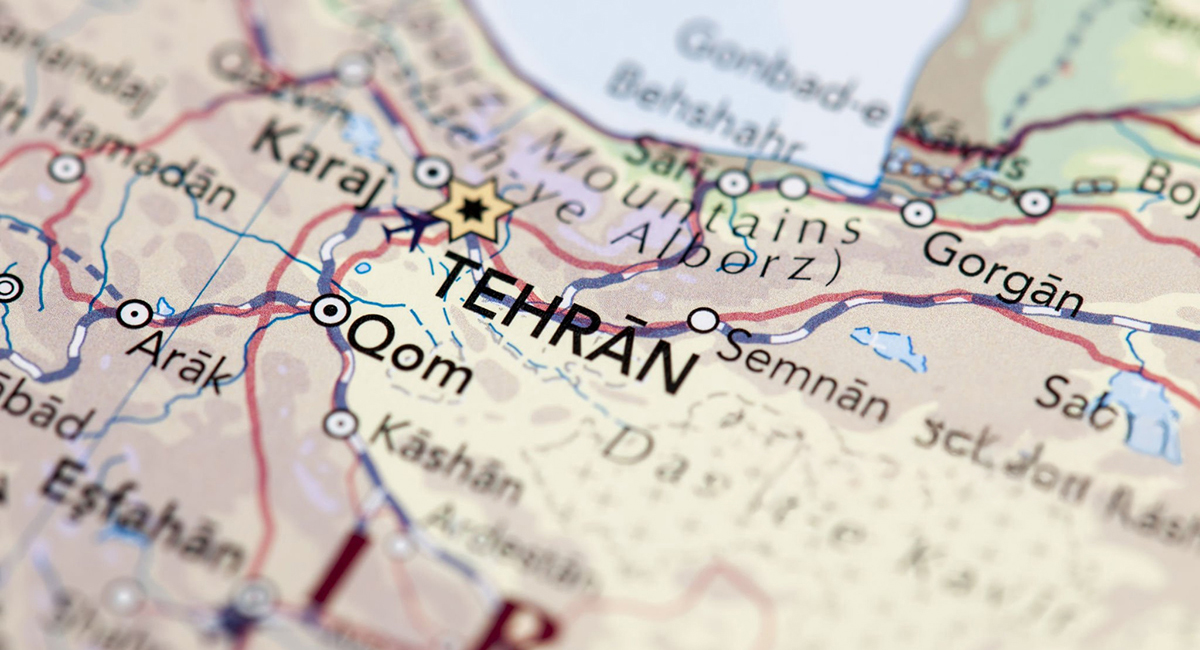
West Texas Intermediate touched $84.59 in Monday trading, its highest intraday level since the Strait of Hormuz crisis began on February 28, after the U.S. military confirmed three more American service member deaths over the weekend, two Saturday and one Sunday, bringing the conflict's confirmed U.S. death toll to 17 during the ninth consecutive night of U.S. strikes on Iranian targets. By late morning the contract had given back most of that move, changing hands near $83.48, after Iran's Foreign Ministry said it had received proposals from international mediators and signalled that negotiations with the United States could continue if they served the country's national interest.
The reversal took hours, not days. Over the weekend, the U.S. reimposed a naval blockade of Iranian ports, Iran's Revolutionary Guard Corps claimed to have intercepted four vessels transiting the strait, and the Pentagon began moving additional F-16 and F-35 squadrons into the region. None of that moved the price as decisively as one sentence from Tehran on Monday morning.
The Market Traded the Wrong Headline First
This is not a story about the market ignoring a soldier's death. It is a story about the market weighting two pieces of information in the opposite order of their actual significance. Amos Tversky and Daniel Kahneman's 1973 research on the availability heuristic found that people judge the likelihood and importance of an event by how easily examples of it come to mind, not by its underlying evidentiary weight. A combat casualty is vivid, immediate and easy to picture. A one-line diplomatic signal is abstract. On Monday, the abstract signal moved the price more than the vivid one, because it arrived second and gave traders a simpler, more actionable story to trade against.
Retail order flow tends to amplify this effect in fast, headline-driven tape. Institutional desks running systematic strategies react to both headlines roughly in proportion to their historical volatility signature. Self-directed investors watching a single news feed are more likely to anchor on whichever item arrived most recently, which is exactly what Monday's price action suggests happened at the retail level even if it cannot be isolated in the aggregate tape.
WTI's climb from below $69 in late June to above $83 today has run alongside a gold price that has not managed a sustained advance despite the same escalating conflict, and the gap between the two has widened sharply since the naval blockade returned on July 15.
WTI and gold daily closes, June 22 to July 20, 2026. Gold's four-week high of $4,185 came on July 8, three days after WTI's four-week low of $68.55.
Gold's Anchor Has Not Moved in a Week
Gold traded near $4,001 on Monday, down 0.4% on the day and essentially pinned to the psychological $4,000 level for a fifth straight session. Last week it fell 3.2%, its worst weekly performance since June, closing below $4,000 on Friday for the first time in more than a month according to Trading Economics data.
Tversky and Kahneman's later work on judgment under uncertainty describes anchoring: once a reference point is established, subsequent information is filtered through that anchor rather than used to update it outright. Here the anchor is not a belief but a price level and the narrative attached to it. After last week's decline, "gold is not behaving like a safe haven in this war" hardened into the operating assumption. Three more American deaths and a reinstated naval blockade were both live over the weekend and neither one was sufficient to dislodge it. WTI, by contrast, has no comparable anchor and reprices on nearly every fresh headline.
The TSX Read Is Not About Energy Weighting Alone
Friday's close at 35,340, down 0.2% on the session, illustrated the same mechanism running through a single index. Energy names advanced, led by Tourmaline, benefiting from the reactive WTI story. Gold miners fell hard: Agnico Eagle Mines dropped 3.6%, Wheaton Precious Metals fell roughly 4%, and Barrick Gold shed about 3%, all reflecting the anchored gold story.
A portfolio holding both energy producers and gold miners can look internally hedged on paper this week. It is not hedged in the conventional sense of offsetting economic exposures. Both legs are being driven by the same underlying bias operating in opposite directions on two different assets, not by two assets responding differently to one economic reality. That distinction matters for how the move gets explained, and it will keep mattering as long as the conflict keeps generating one vivid headline and one abstract one in the same news cycle.