
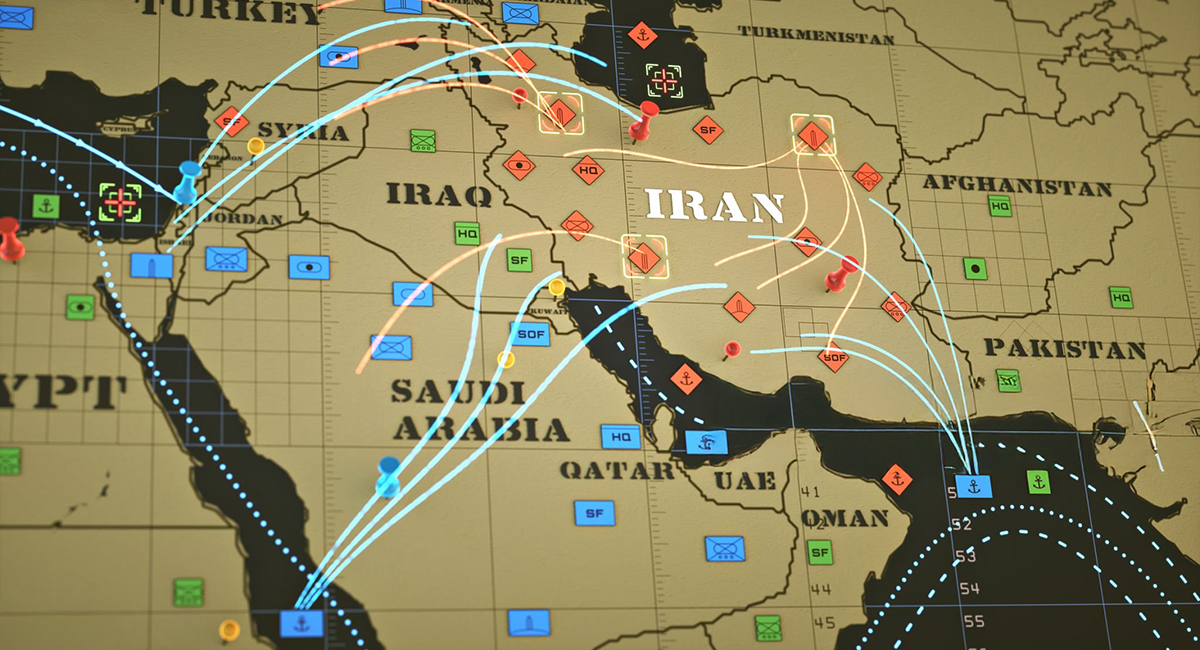
Yemen's Houthi rebels declared a maritime embargo against Saudi Arabia on Monday, effective immediately, in retaliation for what they described as a blockade on Yemen and a recent attack on Sanaa's international airport. The embargo targets the Bab el-Mandeb Strait, the Red Sea gateway that Saudi Arabia has spent the past several months relying on to route oil exports around the Strait of Hormuz disruption entirely.
That routing detail is the reason this development matters more than a single day's muted price reaction suggests.
Why Saudi Arabia's Workaround Is the Actual Story
Since Iran's closure and ongoing disruption of the Strait of Hormuz, Saudi Arabia has diverted millions of barrels of oil per day through a pipeline to an export terminal on the Red Sea. That route has functioned as a relief valve, an alternative path to global markets that has kept the Hormuz disruption from translating into a full regional supply shock. It is precisely why oil prices, despite months of conflict, have traded in an elevated but still bounded range rather than spiking toward the extremes some forecasters warned of in February.
A closure of Bab el-Mandeb removes that relief valve. The Strait of Hormuz alone carries roughly 25% of the world's seaborne oil trade. There is no comparable substitute route if both chokepoints are constrained simultaneously, which is the scenario the Houthi declaration puts on the table for the first time since the current conflict escalated.
Base Case Versus Tail Risk
The market's initial reaction argues for caution rather than alarm. Crude prices were little changed in direct response to the embargo announcement itself. Brent's near 4% overnight jump to above $90 a barrel was driven by separate news, the deaths of US service members in the broader conflict, not by the Houthi threat. The Houthis have also not specified how they intend to enforce the embargo, and Saudi Arabia's own government is visibly split on how to respond: Defence Minister Khalid bin Salman has suggested Riyadh has wide latitude from the Trump administration to strike the Houthis directly, while other parts of the Saudi government describe the kingdom's posture as strictly defensive.
That combination, rhetorical escalation without a stated enforcement mechanism and a divided response from the target government, is the textbook profile of a tail risk rather than a base case. The base case remains that the embargo functions as a pressure tactic tied to the separate Saudi-Houthi dispute over Sanaa's airport, not as the opening move of an actual Red Sea interdiction campaign. The Houthis have disrupted Red Sea shipping before, during the 2023 to 2025 period tied to the Gaza war, so the capability risk is real even if the immediate intent is unclear.
What Today's Mediation Signal Changes
Iran's Foreign Ministry said Monday that international mediators had presented proposals aimed at easing tensions with Washington, and that negotiations could resume if they served Iran's national interests. It is the first concrete de-escalation signal since the ceasefire collapsed roughly two weeks ago, and it is the reason crude eased slightly on Tuesday after ten consecutive nights of US strikes.
Oil's reaction across different time windows shows how much of the conflict premium is still intact despite today's pullback. The percentage move breaks down across four separate windows: today's session, the past week, the period since the ceasefire collapsed, and the past twelve months.
Today's pullback follows Iran's first concrete mediation signal in over a week, but the conflict premium remains intact across every longer measurement window, from the past week through the full year.
The Canadian Portfolio Mechanism
For Canadian portfolios, the practical read is that the energy sector's rally has been built on a one-chokepoint disruption with a working relief valve. If the Houthi threat remains rhetorical, today's mediation signal is the more important data point, and it argues for treating the recent oil premium as vulnerable to a genuine de-escalation. If the embargo moves from declaration to enforcement, the relief valve closes and the Hormuz-driven premium already embedded in Canadian energy names would understate the actual supply risk. Advisors with clients overweight Canadian energy on the Hormuz story should treat the Red Sea development as the variable that determines which of those two outcomes is more likely, not as a footnote to it.