
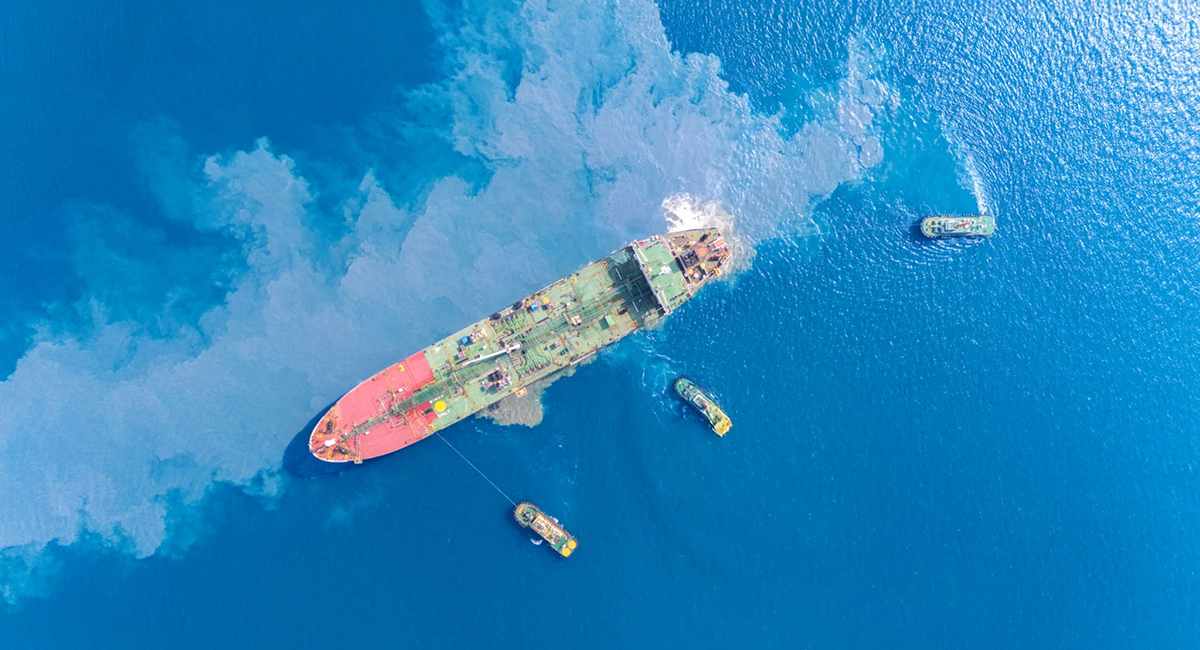
Yemen's Houthi movement said it struck two Saudi oil tankers, the Encelia and the Layla, in the Red Sea on Wednesday night, the first time the widening US-Iran conflict has directly targeted Saudi-flagged shipping outside the Strait of Hormuz. Brent crude closed above $100 a barrel on Thursday for the first time since May 26. West Texas Intermediate settled near $92.
For Canadian portfolios, the direct read-through is a further boost to the energy sector weighting that has already carried the TSX Composite through much of the summer, with Suncor, Canadian Natural Resources, Cenovus and Imperial Oil all positioned to benefit from sustained higher crude. The less obvious consequence runs through the currency. The Canadian dollar has firmed modestly against a softer greenback on oil support, but that support is competing against a broader risk-off pull as the US dollar index climbs toward 101.4 on rising Treasury yields, a tug of war that has kept USD/CAD roughly range-bound near 1.409 rather than delivering the sharper loonie strength a pure oil shock would normally produce.
A Second Chokepoint, Not Just a Wider Hormuz Story
The distinction matters. Five tankers loaded with Saudi crude turned back in the Red Sea on Tuesday, four of them originally bound for the Bab el-Mandeb Strait rerouting toward the Suez Canal, while a fifth reversed course in the Gulf of Aden. That is a different fleet, a different route and a different set of insurers than the Hormuz disruption that has driven the conflict since February. Global spare capacity to route tankers around one blocked corridor assumed the other major corridors stayed open. That assumption no longer holds.
Kazakhstan added a third data point to the same story, halting crude exports through the Caspian Pipeline Consortium terminal after drone attacks on the facility. None of these three disruptions alone would justify Thursday's move. Together, they describe a supply picture with less redundancy than the market had been pricing as recently as Tuesday.
Oil's advance over the past month dwarfs the moves in broader Canadian equities and gold over the same span, a gap that says more about how contained the market still expects this conflict to stay than about the scale of Thursday's escalation.
Oil figures reflect trailing one-month readings as of July 23; TSX and gold figures are calculated from June 9 closing levels for a comparable roughly six-week window. Source: TradingEconomics, Investing.com, USAGOLD.
Base Case Still Holds, But the Tail Risk Is Fatter
The base case coming into this week was an elevated but familiar cadence: the United States carried out its twelfth consecutive night of strikes on Iranian missile storage, drone facilities and coastal surveillance sites Wednesday, a pace markets had largely absorbed into pricing over recent weeks. The muted response in the TSX Composite and the actual decline in gold on Thursday both suggest investors still read the Red Sea attacks as an extension of that familiar pattern rather than a regime change.
Goldman Sachs said Thursday that Brent could rally above $120 a barrel by the fourth quarter if the disruptions persist, a scenario the bank frames as contingent on the Red Sea blockade holding rather than as its central forecast. That is the tail risk this desk is flagging: not a further extension of the Hormuz standoff, which markets have priced for months, but a second corridor closing at the same time as the first stays shut.
What Breaks If the Tail Risk Becomes the Base Case
A sustained closure of both corridors would move oil from a sector-rotation story into a stagflation story for Canadian portfolios. Energy weighting would keep re-rating higher, but the same forces pushing Treasury yields up would pressure rate-sensitive sectors, financials and real estate investment trusts in particular, at the same time. That combination, energy strength alongside broad-market weakness, is a materially different portfolio outcome than the sector rotation the TSX has absorbed comfortably so far this summer.