
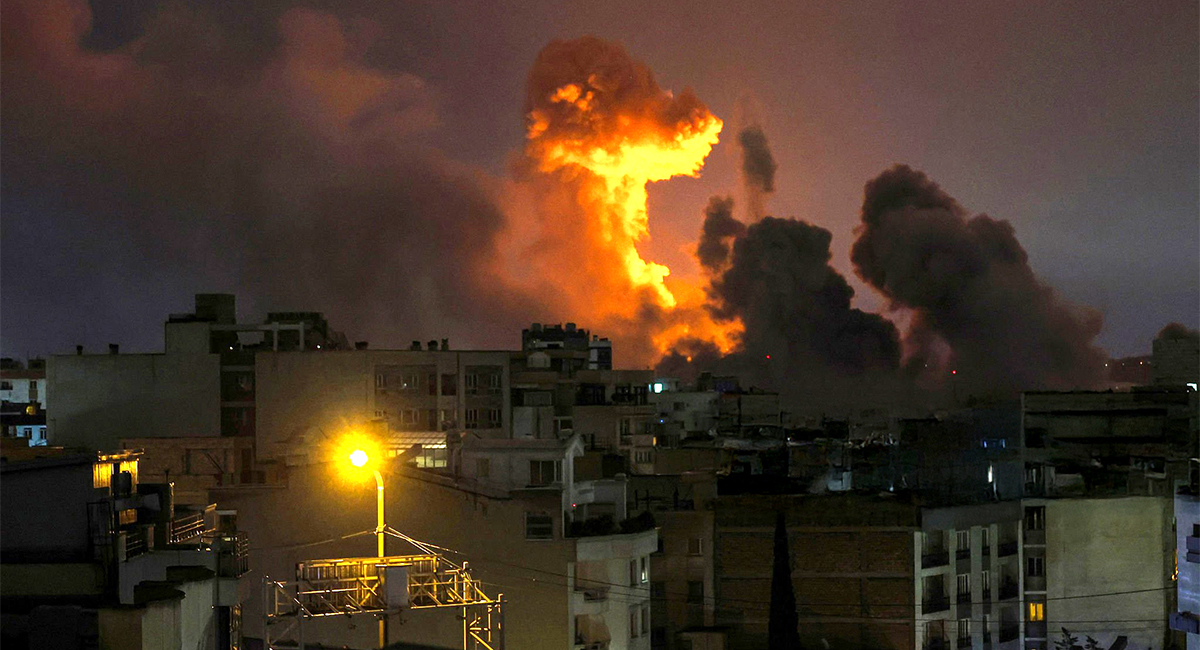
US Central Command carried out fresh strikes inside Iran overnight, with Iranian state media reporting explosions in Bandar Abbas, a southern port city that sits on the Strait of Hormuz, and around the Persian Gulf island of Kish. The strikes followed President Trump's promise of retaliation after Iran's ballistic missile attack on American forces earlier this week, an attack US forces intercepted without casualties. Iran's Revolutionary Guard said Thursday it will punish the aggressor today, and separately maintains it holds full control of the Strait of Hormuz, a claim CENTCOM disputes.
The mechanism connecting this to Canadian portfolios is the one this desk has traced all summer: a disrupted or contested Strait of Hormuz raises the price of the oil Canadian energy producers sell, and raises the input cost the Bank of Canada has to weigh against its own inflation target. WTI crude has climbed back to $85.82 this morning, recovering most of the retreat to $81.04 that defined Tuesday's session, when the diplomatic track looked like the stronger of the two competing stories.
The Diplomatic Track Did Not Survive the Week
Two sessions ago, Iran's foreign minister was in direct talks with Saudi and Omani counterparts on a Hormuz transit mechanism, and WTI had given back roughly half its climb from a $69.23 pre-escalation low to a $92.23 peak on July 23. That retracement was real, not a headline mirage, and this desk treated the diplomatic channel as the stronger signal at the time. Overnight strikes and a same-day threat of retaliation from Iran's Revolutionary Guard are a materially different input than the one that produced Tuesday's retreat, and WTI's rebound to $85.82 is the market's first attempt to reprice that difference.
Base Case Versus Tail Risk
The base case remains that this is another round in a pattern this desk has tracked since February: a strike, a threat, a price spike, followed by a partial retracement once the initial shock fades and no physical tanker traffic is actually interrupted. Since early May, CENTCOM says it has helped facilitate roughly 900 commercial vessels and 450 million barrels of crude oil through the strait despite the rhetoric, evidence that Iran's stated control of Hormuz has not yet translated into a sustained physical blockade.
The tail risk is that this round is different because two fronts are now active at once. The Houthis announced a blockade on Saudi Arabia on July 20, and Bab el Mandeb transits have fallen 22 percent since, pushing some shipping traffic toward the Suez Canal as an alternative route. A Hormuz disruption and a Red Sea disruption happening together removes the redundancy that has kept oil markets relatively calm through prior single chokepoint scares this year. If Iran moves from rhetorical control of Hormuz to actually interdicting tanker traffic while the Red Sea route stays constrained, the supply story becomes structural rather than headline driven, and WTI's current retracement pattern stops being a reliable guide to what happens next.
WTI's round trip since late June, from a pre-escalation low through last week's peak and back to this morning's price, traces both the de-escalation this desk covered Tuesday and the reversal that followed it.
The dashed line marks the $69.23 pre-escalation low this rally is measured against. The July 24 point reflects that session's confirmed 3.12 percent pullback from the July 23 peak.
What Canadian Energy Names Already Priced In
Wednesday's session, before the overnight strikes added a second leg to this story, already showed the sector split this pattern typically produces. Canadian Natural Resources rose 4.6 percent and Cenovus Energy gained 4.5 percent on the day's oil spike and stronger quarterly results, while the broader TSX fell 415.92 points on the same session as higher bond yields pressured financials. A sustained move toward Tuesday's $92.23 peak, rather than a retracement back toward it, would widen that sector split further, and would do so at the same time the Bank of Canada is already watching energy costs as its primary upside inflation risk heading into its September 2 decision.