
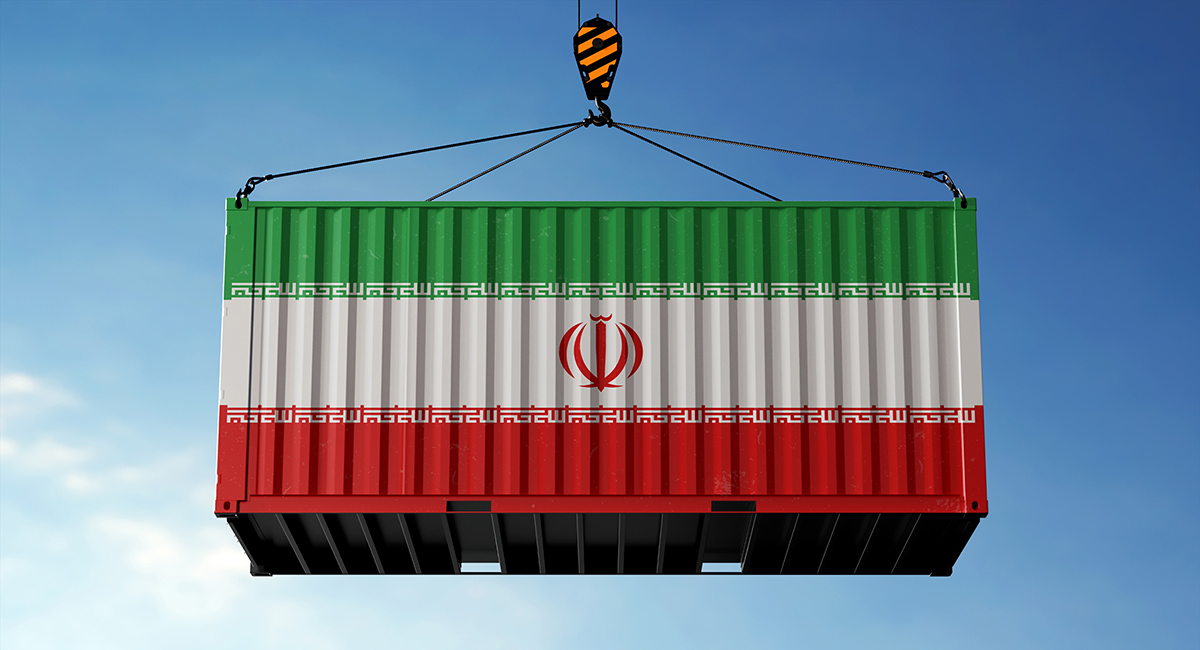
The ceasefire framework that has governed the U.S.-Iran conflict since April 8 rests on a specific and now-visible assumption: that the conflict in Lebanon between Israel and Hezbollah remains separable from the U.S.-Iran nuclear and Hormuz negotiation. On Monday, Iran made explicit that this assumption no longer holds from its perspective. Tehran suspended communications with Washington through intermediaries, reaffirmed its intention to fully close the Strait of Hormuz, and cited Israel's military offensive in southern Lebanon as the trigger.
The announcement sent oil more than 8% higher before a partial recovery driven by Trump's announcement of a Hezbollah ceasefire in Lebanon and confirmation that Iran-U.S. discussions were continuing. By Tuesday morning, Brent was trading near $95, WTI near $92. The market's interpretation is that Monday was a diplomatic disruption, not a diplomatic breakdown. That interpretation may be correct. It is worth examining why it might not be.
The Architecture of the Ceasefire and Where It Is Stressed
The April 8 ceasefire was brokered through Qatar as intermediary and was structured around two linked but theoretically separable tracks: the U.S.-Iran track covering Hormuz and Iran's nuclear programme, and the Israel-Lebanon track covering Hezbollah's operations in southern Lebanon. Iran's negotiators had stated as recently as April that any negotiations with the U.S. would be "unreasonable" if the Israel-Hezbollah conflict continued. The U.S. State Department had mediated a separate Lebanon agreement beginning with the April 16 announcement.
Monday's breakdown followed Israel's seizure of Beaufort Castle in southern Lebanon and continued airstrikes that Tehran characterised as ceasefire violations. Trump's call with Netanyahu was described by sources as heated, with the president pressing Israel to scale back the Lebanon offensive. Netanyahu confirmed Israeli forces would keep striking southern Lebanon "as planned." Defense Minister Israel Katz denied any ceasefire in Lebanon existed.
The structural incompatibility is visible: Iran requires a halt to Israeli operations in Lebanon as a condition for maintaining the U.S.-Iran ceasefire. Israel has stated it will not halt those operations. The U.S. is the only actor capable of bridging that gap, and Trump's public statements on Monday moved in both directions simultaneously, announcing a Hezbollah ceasefire while Netanyahu denied it.
What the Oil Market Is and Is Not Pricing
The chart above shows Brent crude's weekly close from the conflict's onset through June 2, with the major diplomatic milestones marked. The May decline of approximately 19% from the 2026 peak reflected growing market confidence that a 60-day memorandum of understanding between the U.S. and Iran was achievable and would partially reopen Hormuz. Monday's events interrupted that pricing narrative without fully reversing it.
Brent's May decline of approximately 19% from the 2026 peak reflected diplomatic optimism that has now partially reversed; the BoC's April MPR baseline assumed Brent averaging $90 per barrel in Q2, a level the current price exceeds by approximately $5.
The Canadian Portfolio Implication: Base Case and Tail Risk
The base case, supported by the Monday evening reports that talks were back on track through Qatari mediation, is a managed return to the April framework with additional language addressing the Lebanon dimension. In that scenario, oil stabilises in the $90 to $100 range, Canadian energy names remain supported, and the Bank of Canada holds on June 10 with cautious language. TSX energy continues its bifurcated performance relative to rate-sensitive sectors.
The tail risk, which has moved from low-probability to non-trivial, is a sustained breakdown in the diplomatic channel that pushes Brent back toward the $110 to $114 range seen in April and March. In that scenario, the BoC's June 10 language shifts materially toward a hike signal, the five-year Government of Canada bond yield re-prices higher, and the TSX financials and utilities sectors face renewed pressure. Canadian energy would benefit further, but the net portfolio effect for a balanced mandate would be negative.
The distinction between these two scenarios is not visible in Monday's oil price move alone. It is visible in the diplomatic traffic over the next eight days. The specific variable to track is whether the U.S. can deliver a meaningful pause in Israeli operations in southern Lebanon that Iran accepts as sufficient to resume talks. That is a political question, not a market question. The market's Monday afternoon recovery suggests it currently assigns that outcome a high probability. That probability deserves to be held with appropriate uncertainty.