
The Bank of Canada's June 10 decision produced no surprise on the headline: the overnight rate stays at 2.25%, a fifth consecutive hold. The more consequential communication came in the accompanying statement and Macklem's press conference, where the language completed a rotation that began in April. The next rate change the Bank is prepared to make is no longer a cut. It is, conditionally, a hike.
What the Statement Actually Said
The June 10 release from the Bank of Canada was specific about its operating framework. On inflation, the statement noted that "so far, there has been limited evidence of broad-based pass-through of higher energy prices to other consumer prices." On growth, Macklem described the economy as "weak, but not clearly in recession," disputing the technical label while acknowledging the GDP data. On forward guidance, the statement retained the symmetrical language introduced in April: the Bank "stands ready to respond as needed," which has consistently signalled willingness to move in either direction.
The April statement had first used the word "consecutive" in the context of potential hikes, a word choice that moved the BoC's communication closer to explicit tightening bias than at any point since the cutting cycle began. The June statement maintained that posture without escalating it. Macklem's press conference reinforced the reading: when asked whether Canada was in a recession, he offered a methodological correction, not a reassurance. "Economists typically define a recession as a significant broad-based decline in economic activity that lasts for more than one quarter," he said, implicitly distancing the Bank from the GDP label while declining to dismiss the economic softness it reflects.
The Inflation Picture That Explains the Hold
Canada's April CPI came in at 2.8% year over year, the highest in two years. The number was alarming in isolation. In composition, it was not. Excluding gasoline, inflation slowed to 2.0% year over year. Transportation inflation surged to 7.6%, driven by a 29% year-over-year increase in gasoline prices. The energy-to-Hormuz transmission was direct and measurable: the Strait closure removed roughly 20% of global oil supply from normal routing. Canadian pump prices followed Brent.
The BoC's preferred core inflation measures told the cleaner story. The trimmed mean fell to 2.0% and the median fell to 2.1%, their lowest readings in five years. These are the measures the Bank explicitly monitors for its 2% mandate. By its own analytical framework, the Bank was on target in April even as the headline figure suggested otherwise. The June statement's language about "limited pass-through" reflected that core data directly.
The next CPI release is June 22, covering May. It is the most consequential single data point before the July 15 decision. If May energy prices have begun to moderate as Brent retreats toward the Iran ceasefire scenario, the headline number should ease. If core inflation holds or rises, the case for a July hike strengthens materially.
The Mortgage Wall: What the Rate Hold Means for Renewing Households
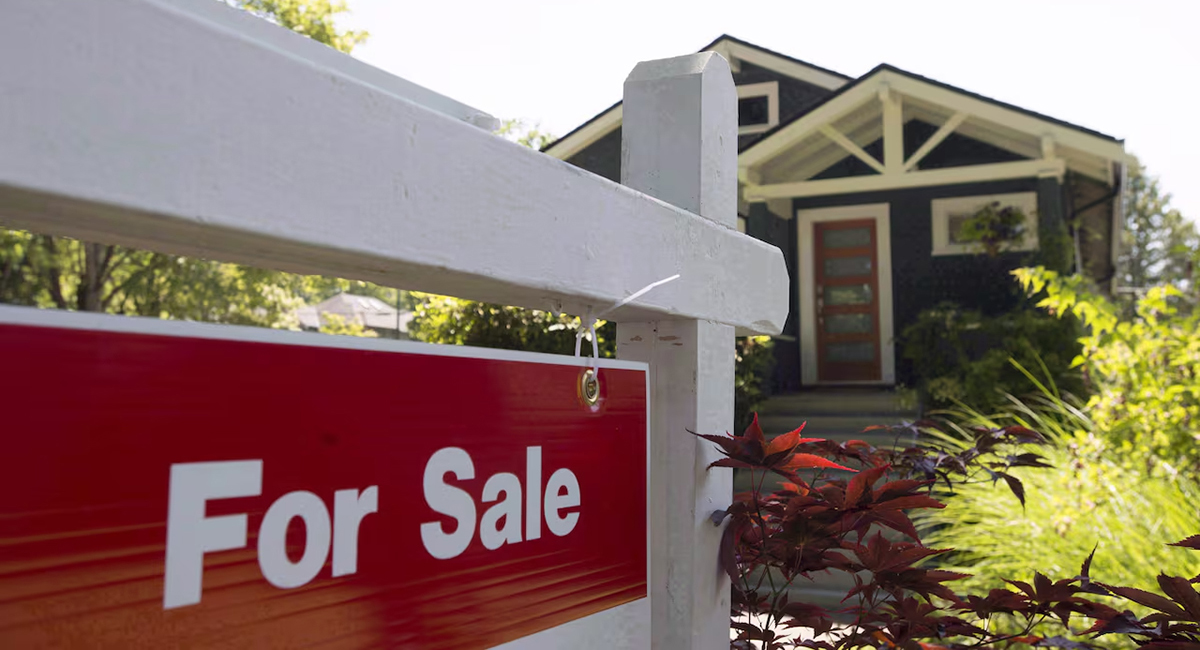
A steady overnight rate at 2.25% keeps the prime rate at 4.45%, which holds variable mortgage rates in place. That is the good news for variable-rate borrowers. The more complicated picture involves fixed-rate renewals, which are not set by the overnight rate. They are set by the five-year Government of Canada bond yield, which closed at 3.06% on June 11, down nine basis points on the session as the Iran ceasefire signalling pushed bond yields lower. The best five-year fixed insured mortgage rate available in Canada as of early June was 4.04%, against a five-year fixed rate of 4.98% at the major banks on a conventional basis.
The scale of the renewal cohort is the policy context that gives the BoC's hold decision its practical weight. The Bank of Canada's own research, published in July 2025, estimated that approximately 60% of all outstanding Canadian mortgages would renew in 2025 or 2026. For five-year fixed borrowers who locked in during 2020 and 2021, at rates as low as 1.39% to 2.5%, renewal at today's rates produces payment increases in the 15% to 20% range on average. The Bank of Canada's own modeling showed a median increase of roughly 20% for this cohort.
The renewal wave creates a policy trap. If the BoC hikes in response to energy-driven headline inflation, it adds directly to the mortgage burden on approximately one million households still working through the renewal cycle in 2026. If it holds while headline inflation creeps toward 3%, it risks allowing energy-price psychology to bleed into wage and services pricing, which is exactly the pass-through scenario the June statement said has not yet materialized.
The overnight rate has been flat at 2.25% since June 2025, a twelve-month hold at the lower boundary of the BoC's estimated neutral range. The shaded band represents the Bank's 2.25% to 3.25% neutral range. The shift in swap market pricing toward a hike, rather than a cut, as the next expected move is the most significant communication change of the June 10 decision.
What July 15 Will Decide
The July 15 decision is the most consequential BoC meeting of the year by a significant margin, and it comes with the next full Monetary Policy Report. That MPR will force the Bank to publish updated growth, inflation, and oil price forecasts for 2026 and 2027. The April MPR assumed oil prices declining to US$75 per barrel by mid-2027. Brent was trading near $89 on June 11, down sharply from earlier highs as Iran ceasefire signals gathered momentum but still well above the April assumption. The Bank will need to reconcile its published forecast with a world that has diverged from it.
The two data points Macklem specifically flagged as inputs to July 15 are the June 22 CPI release and the June employment data, due early July. If May CPI decelerates from 2.8% as energy prices ease, and June employment holds near the May momentum, the case for a hold in July strengthens. If May CPI surprises to the upside or core measures show the first signs of pass-through, the July MPR may carry an explicit tightening signal for the first time since the 2022-2023 hiking cycle. The C.D. Howe Institute's Monetary Policy Council, meeting on June 4, voted unanimously to hold at 2.25% through December 2026, with a majority then calling for a move to 2.50% by June 2027. The market is ahead of that consensus.