
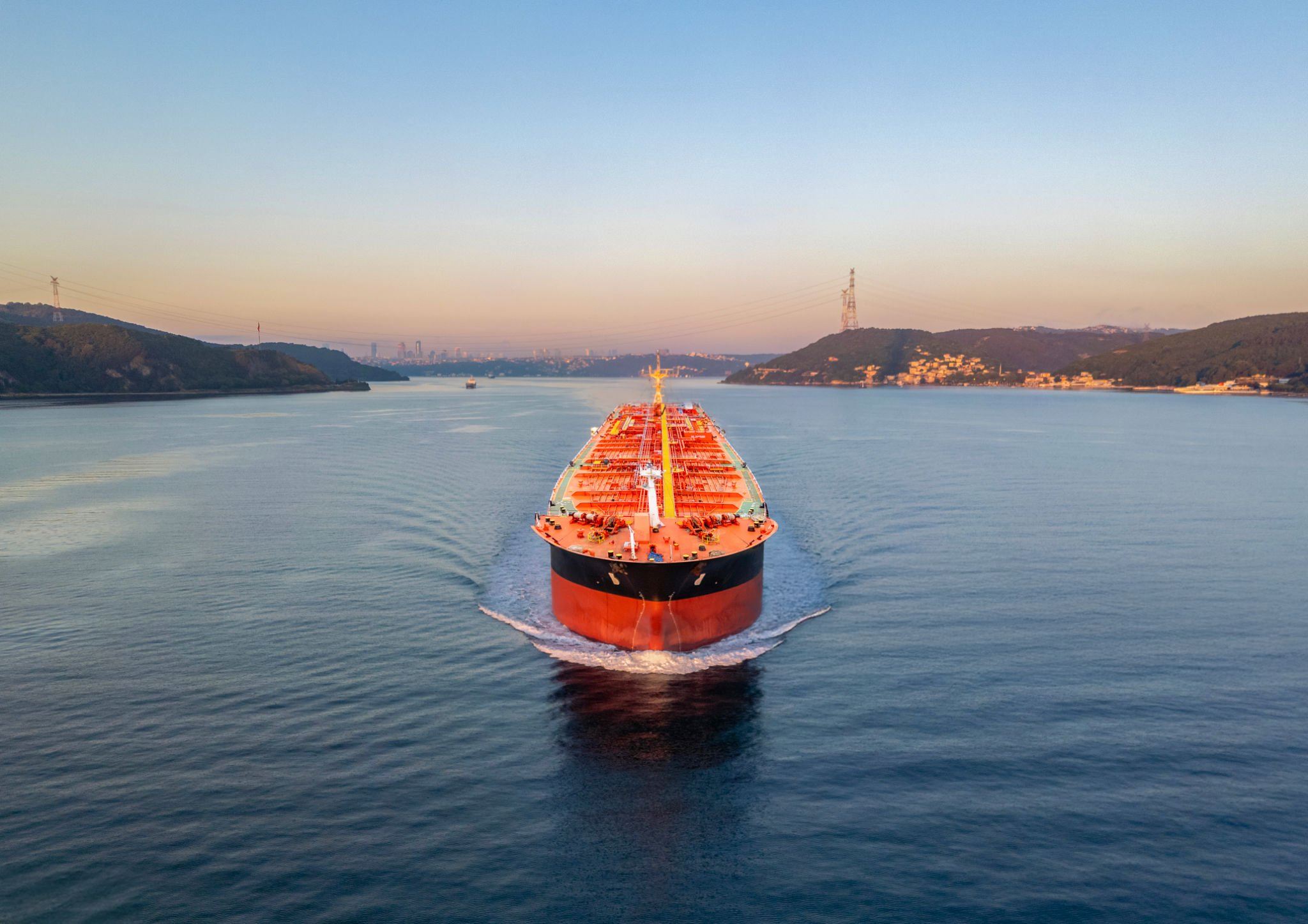
West Texas Intermediate climbed as much as 8.7% Monday afternoon, from an overnight open near $73.64 to an intraday print of $77.61, after President Trump announced the United States would reinstate its blockade on Iranian shipping through the Strait of Hormuz and charge a 20% toll on all other cargo transiting the waterway. That single afternoon announcement moved oil by roughly double the size of the overnight jump that followed the weekend's fourth wave of US strikes on Iran, which had already pushed Brent above $79 and WTI toward $74 by the time this morning's Geopolitical desk went to print.
WTI moved in four distinct steps this cycle: the July 7 tanker attack, the July 8 ceasefire declaration, the weekend's fourth strike wave, and Monday's toll announcement, which produced the largest single move of the four. Intraday pricing as of Monday afternoon, not yet settled.
The Toll Moved Oil More Than the War Did
The mechanism matters more than the headline. A missile strike is a discrete event that markets have learned, over five months of this conflict, tends to fade within days once the immediate shock passes. A 20% toll, if it survives the international pushback already underway from the International Maritime Organization and from Iran's own competing fee claim, is not an event. It is a cost structure. It attaches to every barrel and every container that crosses the strait for as long as the policy stands, regardless of whether the shooting stops.
That distinction connects directly to something the Federal Reserve told Congress three days ago and that this morning's Economy desk only partially captured. Friday's monetary policy report, the first issued under Chair Kevin Warsh, named three specific drivers behind inflation that has "stepped up further this spring": tariffs, the war-related rise in energy costs, and the AI buildout. The Fed did not need Monday's toll to make that case. But a toll that survives a ceasefire is precisely the kind of persistent input cost the report was already describing, and it landed two days before Warsh testifies on that report in person.
Why Gold Stopped Reacting to War Risk
This morning's Behavioural desk explained gold's failure to rally on the weekend's escalation as an availability heuristic problem, with Warsh's testimony and Tuesday's CPI print displacing Hormuz as the more proximate threat in investors' minds. Monday afternoon's data supports a sharper version of that argument. Gold spent the session drifting toward $4,000, down roughly 2.2% from Friday's close, while WTI ripped 8.7% on the same news cycle. Those two moves are not competing for the same attention. They are downstream of the same variable.
The US 10 year Treasury yield climbed toward 4.59%, a seven week high, as the toll reinforced the case for a Fed rate hike rather than reduced it. A higher rate path is exactly what makes it expensive to hold non yielding gold, and exactly what a toll that raises input costs helps justify. Oil and gold used to move together as twin war hedges. Monday they moved apart, because the war stopped being the only thing driving the rate story, and the rate story is now what is pricing both of them.
That same mechanism explains today's equity divergence. The Nasdaq fell 1.6% while the Dow held closer to flat, down only 0.3%, because energy weighted names cushioned the Dow against the same crude spike that pressured rate sensitive technology valuations. Same session, opposite signs, one variable.
WTI and the VIX moved furthest of the eight assets shown. Gold, the traditional war hedge, moved less than half as much as oil and in the opposite direction. Percentage changes, not basis points, for the two yield-sensitive currency and equity entries.
What Wednesday Actually Tests
Every escalation in this conflict since March has produced a sharp initial move that partially or fully reversed within one to two sessions, a pattern this desk has tracked repeatedly, including after the July 7 tanker attack. Monday's toll breaks that pattern's core assumption. A round trip requires the underlying shock to fade. A shipping toll framed as compensation for an indefinite American "guardian" role does not fade with a ceasefire. It requires a separate act of de-escalation, an international legal challenge, or a change in policy, none of which is on Wednesday's calendar.
Wednesday brings Warsh's Senate testimony and the Bank of Canada's rate decision within hours of each other. The Bank is widely expected to hold at 2.25% for a sixth consecutive meeting. The more useful signal will be whether Governor Macklem's language treats this week's yield move as a temporary war premium, the same framing this desk has used for five months, or acknowledges that a structural toll changes the calculus. That framing choice, not the hold itself, is what tells markets whether Monday's move round trips like the ones before it or holds.