
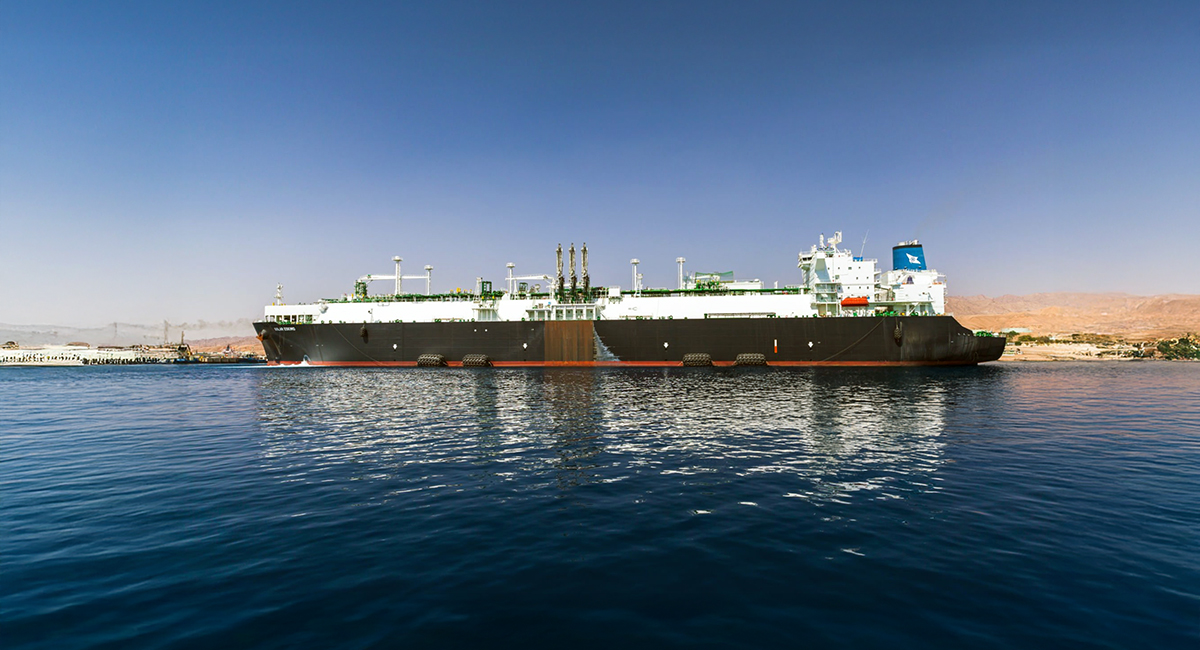
Yemen's Houthi militants said Thursday they struck two Saudi Arabian oil tankers in the Red Sea with missiles and drones, and the United Kingdom Maritime Trade Operations Centre confirmed a vessel was hit by an unidentified projectile off Al Shuhqaiq, causing a fire with no casualties reported. This is not a new escalation in the abstract. It is the specific scenario this morning's Geopolitical desk named as the tail risk, drawn explicitly against a base case of ships simply rerouting around a threat that had not yet turned physical.
The distinction mattered because the two scenarios point to different questions. A self-selecting decline in Bab el-Mandeb traffic, the base case, tightens shipping capacity gradually and lifts costs at the margin. A successful strike on a laden tanker, the tail risk flagged this morning, was the trigger identified for war-risk insurance premiums to harden sharply and for physical flows to constrain for weeks rather than days. By early afternoon, that trigger had been pulled.
The Tail Risk Priced Itself In Within Hours
WTI crude traded as high as $92.23 a barrel by 11:55 a.m. Eastern, up more than 6% and its highest level since before the U.S.-Iran ceasefire, extending a fifth consecutive session of gains. Brent crude, the international benchmark, moved further still, trading near $98.61 and briefly topping $100 for the first time in two months. President Trump threatened what he called major military punishment against the Houthi rebels if the attacks continue, a signal that raises rather than lowers the odds of a wider response.
The Canadian index absorbed the shock alongside Wall Street rather than in isolation from it. The TSX composite was down 378.25 points to 35,106.86 in afternoon trading, giving back most of Wednesday's push toward its record close. Bank names led the decline, with RBC and TD both down close to 2%, a detail that matters because it shows this was not simply Wednesday's energy-led gain running in reverse. It was a broader repricing.
A second shock compounded the first. Alphabet fell roughly 6% after raising its 2026 capital spending forecast to as much as $205 billion, reviving investor unease about the pace of artificial intelligence spending. Tesla fell 13 to 14% after costs outpaced sales and free cash flow swung negative. This morning's Market desk flagged Nasdaq futures softening ahead of the full reaction; the session's actual move, with the Nasdaq down as much as 2.7%, ran considerably sharper than the early after-hours estimate suggested.
WTI's climb from the low seventies three weeks ago to above ninety two dollars today traces almost exactly onto the Bab el-Mandeb timeline, from the first blockade declaration to today's confirmed strike.
WTI has not traded this high since before Washington and Tehran struck their ceasefire in June, with the two event markers spanning Monday's blockade declaration and today's confirmed tanker strike.
Gold's Refusal to Rally Is the More Useful Signal
If this were unfolding as a pure fear event, the kind that sent gold higher through the earlier stages of the Hormuz conflict, gold should have caught a bid alongside oil today. It did the opposite. The August contract fell $97.20 to $4,054.70 an ounce even as the tail risk this morning's Geopolitical desk flagged turned real and equities sold off broadly.
This morning's Behavioural desk warned that the TSX's push toward its record this week was narrow, carried by gold miners and energy names, and cautioned against extrapolating that pattern forward through the availability heuristic. Today's session did not extend the pattern. It broke it. Gold miners fell alongside the banks, and the metal itself moved against the escalation rather than with it.
The mechanism is the one this morning's Economy desk was already tracking. Fed hike odds for the July 29 decision had faded from a peak above 46% earlier this month to under 17% by Tuesday, but oil's continued climb left the Bank of Canada's own calculus unchanged regardless of what Washington does first. A supply-driven oil spike reads as an inflation shock, not a safety trade, and inflation shocks pull yields higher rather than pulling capital into gold. The U.S. 10-year Treasury yield stood at 4.697% Thursday, and Deutsche Bank's Jim Reid noted directly that the combination of a shipping attack and a fresh leg higher in oil had revived speculation about further rate hikes rather than rate relief.
WTI and gold moved in the same direction for most of the past month, and today marks the sharpest split between the two since the ceasefire, with oil breaking higher on the shipping attack while gold gave back Wednesday's gain entirely.
Gold closed Wednesday at $4,158.50 on broad war-premium buying; today's decline to $4,054.70 came on the same session oil broke above ninety two dollars, the clearest divergence in the pair since the June ceasefire.
The Mechanism the Tax Desk Flagged This Morning Just Moved
This morning's Tax and Wealth desk framed the prescribed rate's five-quarter run at 3% as vulnerable to a Governor Macklem hike signal, built on Government of Canada T-bill yields that respond to exactly this kind of inflation pressure. Today's bond market reaction puts that mechanism in motion within a single session rather than as a hypothetical for next quarter. The Q4 prescribed rate itself will not be set until the CRA calculates the average T-bill yield in October, but the yield pressure feeding that calculation moved today, not next month.
The shift for Friday is less about probability and more about duration. This morning's framework treated the Bab el-Mandeb threat as conditional. This afternoon converted it into an active disruption with a confirmed physical strike, a presidential threat of retaliation, and a market reaction spanning currencies, equities, and gold at once. The open question is no longer whether the Houthis can affect Saudi export capacity. It is how long insurers and shippers price that risk as real.