
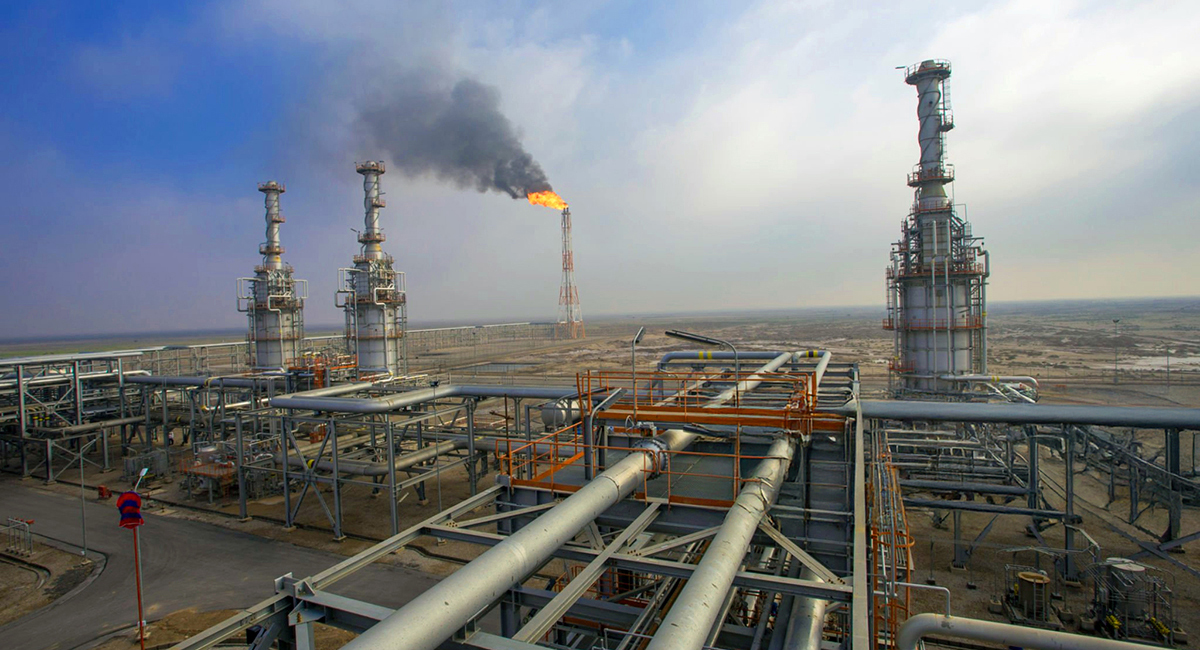
Yemen's Houthi movement claimed an attack Tuesday on Saudi Arabia's East-West Pipeline, the same infrastructure Saudi Arabia built specifically to move crude to the Red Sea without transiting the Strait of Hormuz. Saudi authorities separately said they intercepted drones launched from Iraq targeting petroleum facilities, blaming Iran-backed groups. Both developments landed inside a week the market has otherwise read as de-escalation, and that mismatch is the mechanism Canadian energy portfolios need to price, not the headline diplomacy alone.
The Chain Runs Through a Pipeline Most Portfolios Have Never Priced
The East-West Pipeline, also known as Petroline, carries up to five million barrels a day from Saudi Arabia's eastern fields to the Red Sea port of Yanbu, and its entire strategic purpose is to let Saudi exports bypass Hormuz if the strait becomes unusable. Every model of how bad the Hormuz disruption could get has implicitly assumed this pipeline stays open as the release valve. A claimed strike against it, even if damage proves limited, tests an assumption that has been doing more work in market pricing than the headline Hormuz story alone. For Canadian energy names including Suncor, Canadian Natural Resources, and Cenovus, the re-rating case built over the past five months has rested partly on the idea that global supply has an escape route even during the worst of the disruption. If that escape route is now contested territory too, the ceiling on how far a renewed escalation could push prices is higher than the market has been assuming, regardless of what happens at the negotiating table.
The Base Case Still Says De-escalation
Set against that, the diplomatic track firmed today. President Trump described the US as engaged in good talks with Iran and said there was a good chance of a resolution, while cautioning that strikes would resume if negotiations failed. Oman has proposed a joint regional mechanism to manage Hormuz shipping, including a voluntary fee system, the most concrete institutional step toward normalized transit floated since the conflict began in late February. WTI has fallen for three straight sessions, down twelve percent from last Thursday's six-week high, which is the market's own vote that the diplomatic track is the more probable path.
The chart tracks WTI against both the escalation and de-escalation markers of the past three weeks, with the pipeline claim landing inside the same window the market was treating as the diplomatic track reopening.
The claimed strike on the East-West Pipeline landed inside the same window markets were treating as the diplomatic track reopening. Source: Trading Economics, Saudi state media reporting via wire services.
Calibrating the Probability, Not Just the Headline
This remains a base case of continued de-escalation, not a call to treat the pipeline claim as the start of a new crisis. Saudi Arabia has not confirmed damage, oil's three-session decline has continued through both incidents without reversing, and Iran has said it will maintain its own pause as long as the US does. The tail risk is real but distinct from the Hormuz story markets have spent five months pricing: it is that the alternative routes built to cap the disruption's worst case are no longer automatically safe, which would matter even in a world where Hormuz itself stays open. Advisors should treat today's news as a reason to know which specific infrastructure underwrites a client's energy thesis, not as a reason to abandon the de-escalation base case the market is still pricing.