
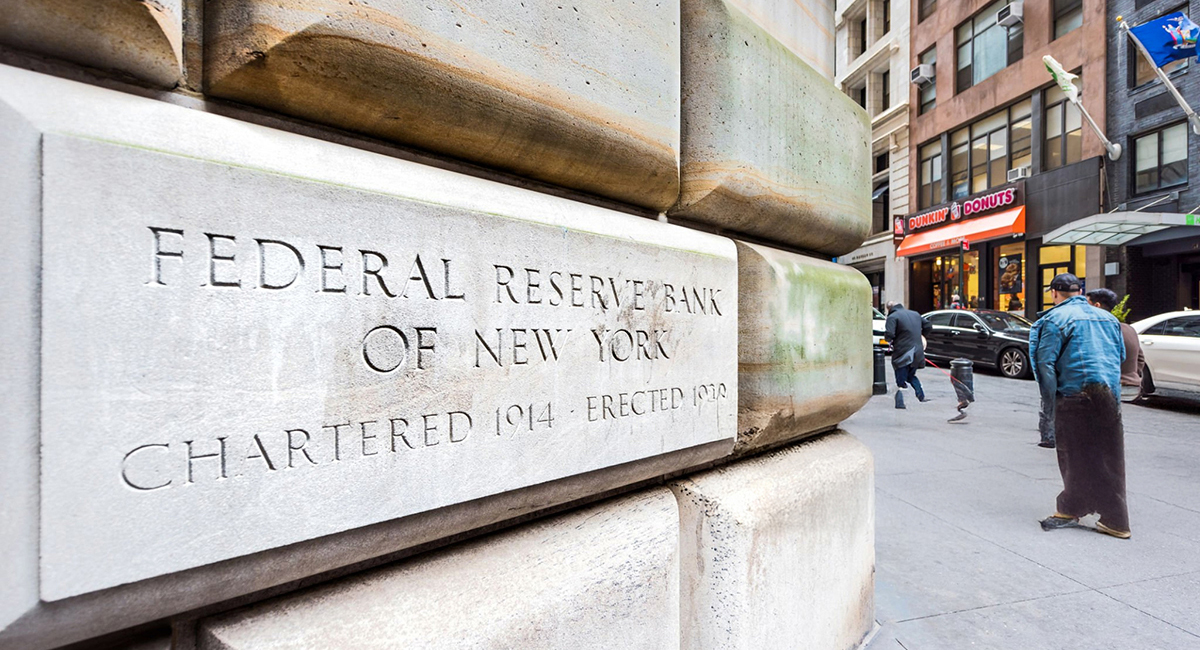
Wall Street enters Wednesday's Federal Reserve decision pricing roughly a one-in-three chance of a quarter-point hike, a probability that has barely moved since Thursday even though the commodity that built the entire inflation case behind it has fallen nearly twelve percent since then. That gap between the odds and the oil price is the story, and it says something specific about how this Fed meeting will be read.
A Hike That Did Not Need Oil to Stay Alive
CME FedWatch priced a July hike at just 10.7% on July 15. By July 22 that figure had more than tripled to 34.7%, and it peaked near 38% on July 23, the same session WTI crude touched a six-week high above $92. Since then, oil has fallen for three straight sessions to $81.51. A purely mechanical read would expect hike odds to fall by a similar magnitude. They have not. As of Tuesday, CME FedWatch and Investing.com's Fed Rate Monitor both show odds sitting near 36%, down only modestly from the peak.
The reason is that the inflation case for a hike was never only about this week's spot oil price. May's headline US inflation reading came in at 4.2%, and that print, along with the weeks of elevated energy costs that preceded it, is already embedded in the data the Federal Open Market Committee will weigh on Wednesday. A three-day price reversal does not unwind a month of realized cost pressure sitting in the CPI basket. Chair Kevin Warsh has also eliminated the forward guidance that previously let markets calibrate gradually, so each new data point now moves the odds by more than it once did.
Hike odds rose in step with WTI through the peak on July 23, then diverged sharply: oil gave back most of its gain within three sessions, while the odds retreated only a fraction of the distance.
Hike odds peaked at 38% on July 23, the same session WTI touched its six-week high. Odds retreated only nine points through Tuesday even as oil gave back nearly all of its three-week gain. Source: CME FedWatch, Trading Economics.
Why September Matters More Than Wednesday
The more informative number may not be Wednesday's odds at all. The probability of at least one hike by the September meeting sits near 80%, according to CME FedWatch, essentially unchanged through this week's oil retreat. Because these probabilities are cumulative rather than independent bets at each meeting, an 80% September figure alongside a 36% July figure reads as a market that has largely stopped debating whether the Fed tightens this cycle and started debating only when. A July hold, if that is what Wednesday delivers, would not function as an all-clear signal. It would read as a deferral, not a reprieve.
The Bank of Canada Is Having a Calmer Conversation
Canada's policy debate looks different by design. The Bank of Canada held its overnight rate at 2.25% on July 15 for a sixth consecutive meeting, and June's inflation print came in at 2.8%, down from 3.2% in May, with the Bank's preferred core measures falling to their lowest level in more than five years. April GDP rebounded 0.5%, a nine-month best, with the May reading due Friday. The Bank's own Q2 2026 Market Participant Survey, released July 27, found that senior economists and strategists now expect no further rate cuts this year, with the overnight rate holding at 2.25% through December. The next BoC decision is not until September 2, giving the Bank five weeks to watch Wednesday's outcome before it has to say anything at all.
That calm has limits. Canadian government bond yields have tracked US Treasury moves closely through this cycle regardless of what Canada's own inflation data says, because capital flows respond to the cross-border rate differential, not to either country's data in isolation. A hawkish Warsh statement or a surprise hike Wednesday would likely pressure the Canadian dollar and push Canadian yields higher even though nothing in Tuesday's Canadian data changed. The BoC's patience buys time. It does not buy insulation.