
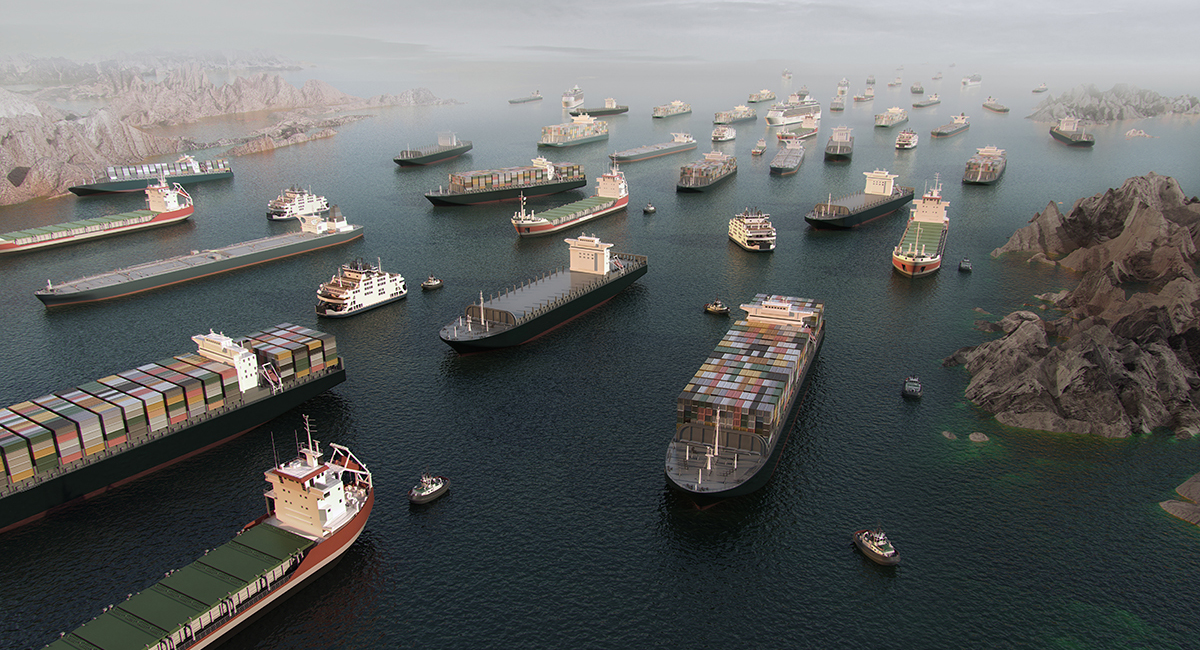
The United States, Iran, and Oman are reportedly closing in on a 60-day interim deal to reopen the Strait of Hormuz, with Washington targeting a Wednesday announcement, according to Axios. Under the terms described by regional sources, ships entering the Persian Gulf would use a northern route through Iranian territorial waters, while ships heading out toward the Arabian Sea would use a southern route through Omani waters, coordinated with Tehran. No tolls would be charged during the 60-day period, and the parties would work to clear naval mines from the strait's median shipping lane within 30 days.
Hours after that reporting, Iran's foreign ministry said the strait would not open to traffic until the United States ends its blockade, a condition that had not been met as of Wednesday evening, according to UPI. The same day, Yemen's Houthis, an Iran-aligned faction, said they struck a Saudi oil tanker near Yanbu in the Red Sea, reintroducing supply risk a day after oil had fallen more than 5% on optimism the Hormuz deal was close.
The Deal Gives Iran More Control Than It Held Before the War
The arrangement under discussion is not a return to the pre-war status quo. Before the conflict began in late February, the Strait of Hormuz operated as international waters with free transit for all shippers. Under the reported terms, inbound traffic would move through Iranian territorial waters and outbound traffic through Omani waters coordinated with Iran, and once the median lane is demined, permanent administration of two-way traffic would be negotiated between Iran and Oman, without the United States at that table.
IG analysts described the central sticking point as whether Iran continues to insist on a degree of control over the waterway and whether the US stands firm against that outcome. The deal now reportedly under discussion resolves that sticking point in Iran's favour. A structure that concentrates control with one party is a different kind of arrangement than a neutral, internationally administered strait, and its durability depends on incentives holding in a way a balanced framework would not require.
The Precedent Markets Should Not Ignore
This is not the first time a Hormuz deal has appeared close. Three weeks ago, the White House, Oman, and regional mediators believed they had reached an agreement with Iran, only to see Iran resume attacks on shipping days later. That collapse triggered two weeks of fighting that came close to an all-out war between the US and Iran.
HDQ's base case remains gradual de-escalation. President Trump paused a planned campaign of strikes specifically to allow this round of negotiations, mediators from Qatar, Pakistan, and Saudi Arabia are involved alongside Oman, and a US official told Axios that Iran's leadership completed its internal approval process on Tuesday. The tail risk is a repeat of three weeks ago: Iran's stated condition on the US blockade remains unmet, and Wednesday's Houthi attack on a Saudi tanker is the same category of provocation that derailed the prior attempt. Both scenarios remain live, and the difference between them is not yet resolved.
WTI crude has swung from below $69 in early July to nearly $88 in late July and back to the mid-$70s this week, a range that reflects the market repeatedly repricing the same underlying uncertainty rather than settling on an answer.
WTI fell more than 10% over two sessions on August 3 and 4 as Hormuz deal reports circulated, then held near $75 Wednesday after the Houthi tanker attack partially offset the decline.
The Canadian Portfolio Mechanism
Oil price whiplash translates directly into Canadian energy sector earnings volatility. Canadian Natural Resources beat its second quarter profit estimate this week on stronger oil and natural gas prices, a result that would read differently under a sustained de-escalation scenario than under a renewed supply scare. Gold's Wednesday rally, tied to the same Houthi attack headline that moved oil, is the more direct safe-haven expression of the same uncertainty, relevant for advisors with clients concentrated in Canadian energy names and looking for a partial hedge. Government of Canada bond yields have also moved with oil-driven inflation expectations through this conflict, a mechanism the Economy Desk covers directly, but the geopolitical trigger for that mechanism is the Hormuz outcome described here.