
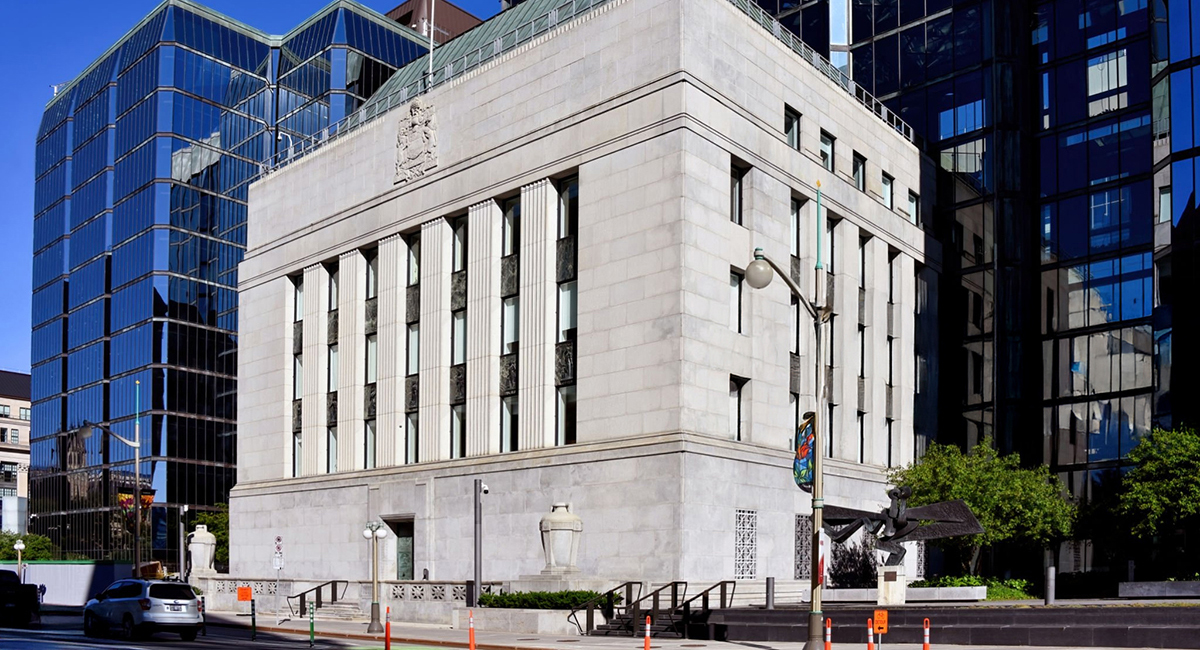
The Bank of Canada held its overnight rate at 2.25% for a sixth straight decision on July 15, with growth tracking above the Bank's own estimate, unemployment down to 6.4%, and headline inflation easing to 2.8% in June from 3.2% in May. Bond markets are pricing a near-certain hold and zero probability of a cut at the next decision on September 2. On the numbers the Bank itself is watching, September 2 looks close to a formality.
The more consequential dates for Canadian bond yields sit on either side of it. New Federal Reserve Chair Kevin Warsh delivers his first Jackson Hole keynote on August 28, five calendar days before the Bank of Canada announces. The Fed's own next rate decision does not land until September 16, two weeks after Ottawa has already spoken.
Two Central Banks Reading Different Numbers
The Bank of Canada's July decision reflected a domestic picture that has genuinely improved. Governor Tiff Macklem told reporters the Bank will not let higher oil prices become persistent inflation, and the data has largely supported that stance so far. Growth firmed through the second quarter, core inflation measures held near 2%, and the Bank's own Monetary Policy Report projects a return to the 2% target by early 2027.
The Fed is working from a different set of numbers entirely. Its July 29 statement held the target range at 3.50% to 3.75%, but three FOMC members, Beth Hammack, Neel Kashkari, and Lorie Logan, dissented in favour of raising it a quarter point. The statement cited elevated inflation tied in part to energy price shocks from the Middle East conflict, the same conflict the Bank of Canada has described as a temporary pressure rather than a persistent one. The two central banks are looking at the same war and drawing different conclusions about what it means for policy.
The Bank of Canada cut nine times between June 2024 and October 2025, then held at 2.25% for six consecutive decisions. The Fed funds floor of 3.50% sits well above where the BoC has parked since October.
Why Warsh's Speech Reaches Canada Before the Fed's Vote Does
Canada's 10-year government bond yield sits near a two-month high at 3.68%, and it has moved largely in sympathy with US Treasury yields even though the Bank of Canada has not touched its own rate since October. Fixed mortgage rates in Canada track that bond yield, not the overnight rate directly, which means a hawkish signal from Warsh on August 28 can move Canadian borrowing costs before the Bank of Canada has said a word at its own September 2 meeting, and well before the Fed itself casts an actual vote on September 16.
Warsh has described his Jackson Hole address as an opportunity to frame the big questions rather than react to the latest data print, and has said the Fed is not constrained by market prices. A speech built around long-run framing rather than near-term signalling is, if anything, more likely to move yields on interpretation than a narrower, data-specific statement would.
What the BoC Actually Has to Decide
Set against that backdrop, the Bank of Canada's own September 2 announcement carries less discretion than the calendar suggests. With growth, employment, and inflation all pointing the way the Bank wants, and market pricing already at zero probability for a cut, the decision most likely to move Canadian yields this cycle is not the one Ottawa makes on September 2. It is the one Washington has not made yet.