
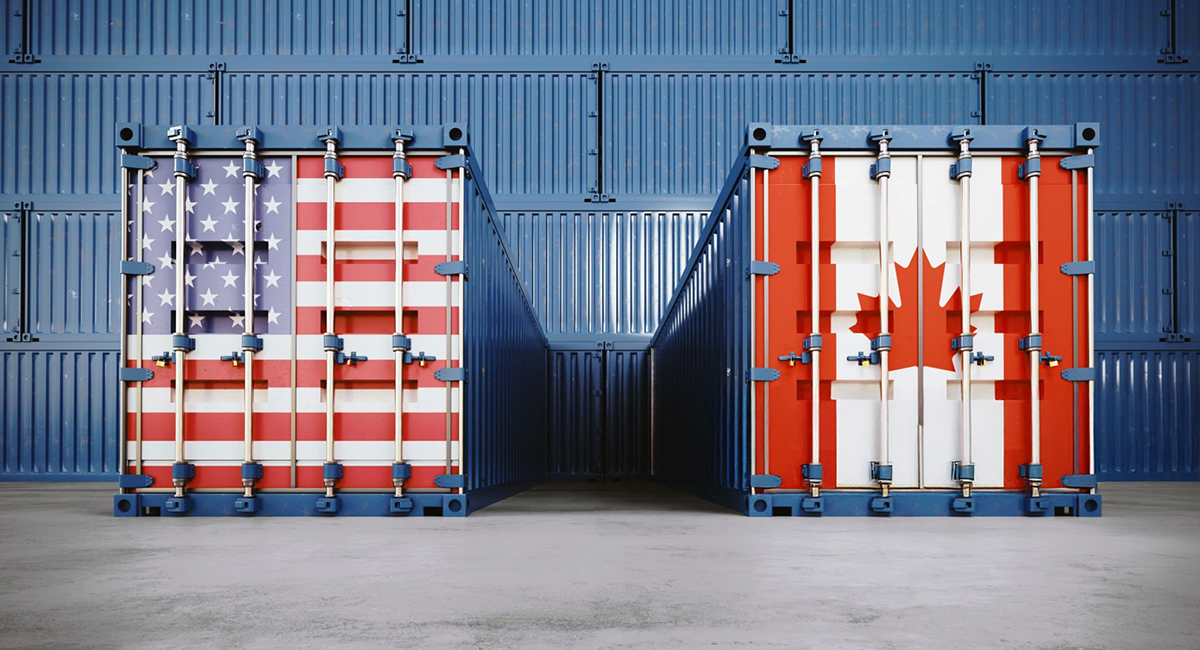
The Government of Canada 10-year yield closed at 3.65% on Tuesday, easing roughly 10 basis points from the 3.76% high it touched on August 21, which was itself the highest level since April 2024. The retreat has now run four consecutive sessions, spanning the same window in which the US-Canada trade dispute escalated from stalled talks to confirmed retaliatory tariffs.
Bond yields fall when investors expect either lower inflation, lower growth, or increased demand for safety. The mechanism at work here is squarely the second: a trade war that raises costs for Canadian exporters and importers alike is a drag on growth, and a market pricing in weaker growth prices in a Bank of Canada less likely to raise rates, not more.
What the July Data Actually Said
Taken alone, July's domestic data would have argued for the opposite move. Statistics Canada's Labour Force Survey showed the economy added 75,000 jobs in July, comfortably beating expectations, while headline inflation ticked up to 2.9%, driven largely by gasoline prices rather than broad-based price pressure. Canada's second-quarter GDP is estimated to have expanded at an annualized 3.4%, well above the Bank of Canada's own 2.5% forecast.
Two weeks ago, that combination of data was doing exactly what strong data normally does to yields: the 10-year climbed to 3.72% on August 10 on stronger-than-expected factory sales, then continued higher through most of the following week. The August 21 peak at 3.76% arrived on the same day markets were still processing that strength alongside a separate global bond selloff tied to elevated oil prices and a US Treasury buyback announcement.
Why Trade Risk Overrode Strong Data
What changed after August 21 was not the July data being revised. It was a new input arriving on top of it: the confirmed collapse of US-Canada trade talks, followed by Canada's own C$27.6 billion counter-tariff package effective September 8. Trading Economics attributes the yield's retreat directly to this sequence, noting that risks to growth from higher tariffs have reduced the case for a Bank of Canada hike this year even as the economy has shown signs of recovery.
This is the ordinary mechanics of a two-sided data set resolving in one direction. Strong domestic data raises the odds of a hold or hike in isolation. A trade shock that threatens to subtract from growth in the following quarters outweighs that signal, because monetary policy responds to where growth and inflation are headed, not only to where they currently sit. The bond market's read, evident in four straight sessions of yield declines, is that the trade shock is the dominant input right now.
The September 2 Decision
Governor Tiff Macklem's Bank of Canada must resolve the same tension the bond market has been pricing. The July labour and GDP data support the case for holding rates steady or even considering a hike later this year. The trade war escalation, with its concrete September 8 tariff date now nine days after the rate decision itself, argues the opposite. Market pricing via the yield curve currently favours the growth-risk read, but the Bank's own framing will matter more than the market's, since a Monetary Policy Report that leans hawkish on the July data despite the trade shock would reverse the yield's recent direction quickly.
The yield eased for a fourth straight session after touching 3.76% on August 21, its highest level since April 2024, as trade war escalation lowered the probability markets assign to a Bank of Canada hike this year.