
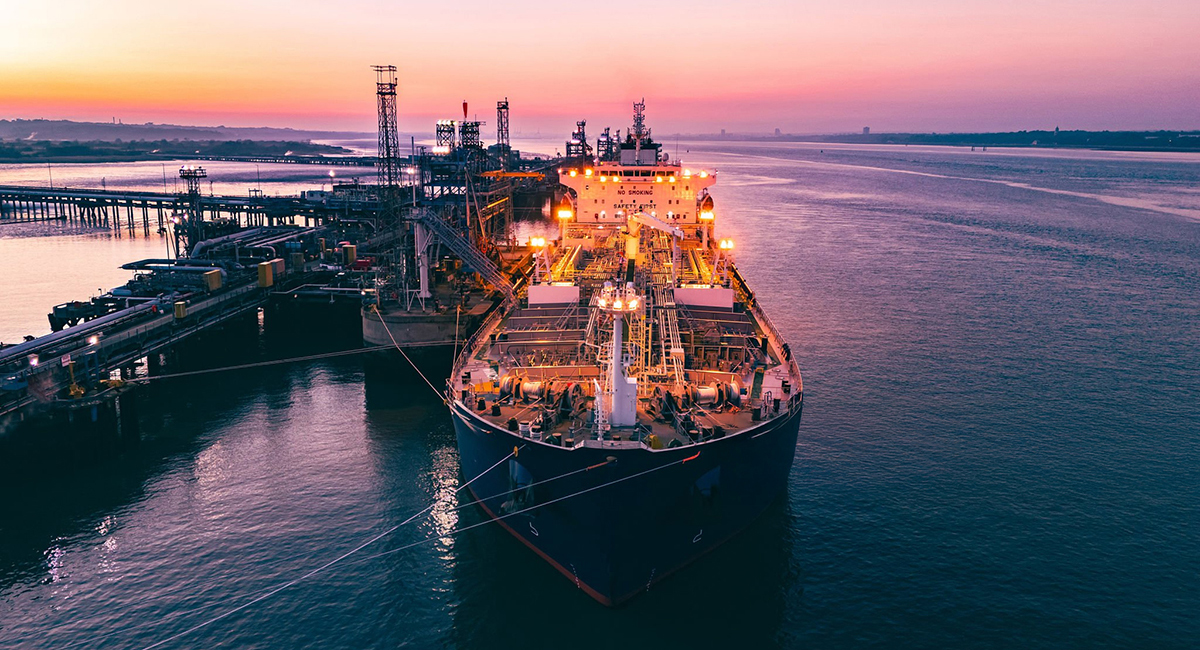
Iran says it struck U.S. tankers and warships in the Persian Gulf this week. The United States says it hit ten Iranian tankers in response, and a drone separately struck an Iraqi crude tanker. U.S. Secretary of State Marco Rubio put the American position bluntly: for every time Iran does that, or tries to, they are going to lose tankers. Iran has signalled it intends to escalate further.
The market reaction has been exactly what a shooting war around the world's most important oil chokepoint should produce. WTI crude closed at $97.26 Thursday, up 18% from $82.23 on August 26. Brent has cleared $101. Iran's own oil exports have effectively collapsed, down roughly 80% year over year under the renewed U.S. blockade.
Why This Should Have Moved the Canadian Dollar More
Canada is a major oil exporter, and the Canadian dollar has historically tracked crude prices closely because energy is Canada's largest single export by value. An 18% move in WTI over thirteen sessions is, by that logic, exactly the kind of event that should push the loonie meaningfully higher against the U.S. dollar.
It has not happened. USD/CAD moved from 1.3845 on August 24 to 1.3771 on September 9, a Canadian dollar gain of roughly half a percent, a fraction of what the historical relationship between oil and the loonie would suggest for a move this size. The currency market is not pricing this oil spike the way it normally prices a Canadian energy windfall.
The chart below traces the oil side of that story: the tanker war's effect on WTI over the same window the currency barely moved.
WTI's climb has been near-continuous since the tanker war began escalating in late August, accelerating further after this week's strikes. Source: Investing.com.
Tail Risk Versus Base Case
The base case, per ANZ's Daniel Hynes, is that Persian Gulf oil flows stay disrupted for the foreseeable future without a full closure of the Strait of Hormuz. ING's commodity desk has warned the market could tighten more sharply if disruptions worsen from here, which is the tail risk: a move toward the $120 level Goldman Sachs has floated, tied to an actual chokepoint closure rather than the current pattern of tanker strikes.
The political timeline adds its own uncertainty. Trump has suggested the conflict could wind down after November's elections. His own advisers have reportedly warned it could extend through 2029. Neither claim is a forecast Canadian advisors should build a portfolio around, but the gap between them is a useful measure of how unresolved the situation actually is.
What the Muted Loonie Means for Portfolios
A Canadian investor holding TSX energy names is capturing the oil move directly. A Canadian investor holding unhedged U.S.-dollar assets, expecting the usual currency tailwind from a Canadian energy windfall to offset some of that U.S. exposure, is not getting nearly as much of it as the historical relationship between oil and the loonie would suggest.
That gap is worth a specific conversation, not an assumption. The energy sector re-rating this conflict has produced is real and is showing up in equity prices. The currency-level benefit Canadian portfolios have come to expect from that kind of move is showing up only partially, which changes the math on how much a war-driven oil rally is actually doing for a diversified Canadian portfolio's U.S.-dollar exposure.