
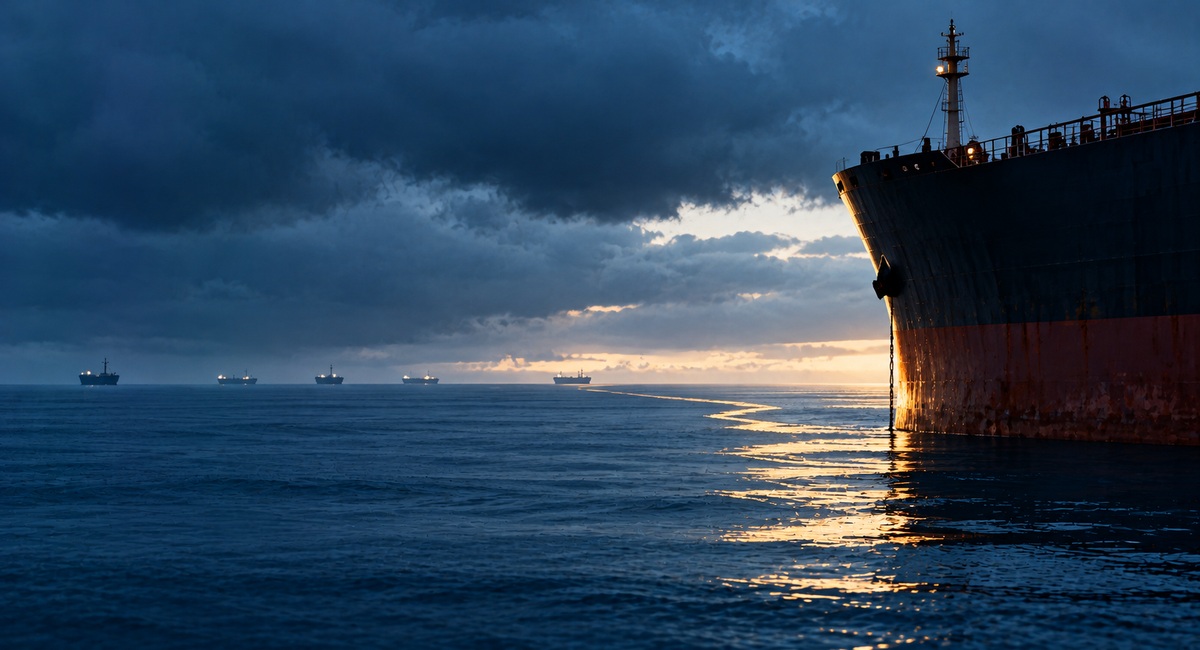
Brent crude rose more than 5% to $105.46 a barrel shortly after 7 a.m. ET on Thursday, with West Texas Intermediate near $92.82, according to CNN. The move follows Kpler data showing a record 10 tankers struck between September 28 and October 4, against a previous weekly high of six, and only seven tankers transiting the Strait of Hormuz on Tuesday, the fewest since July 23.
Brent had closed Wednesday at $100.20, according to Investing.com. A tanker about 59 miles off Madinat ash Shamal, Qatar, was hit by multiple projectiles the same day, the UK Maritime Trade Operations agency reported.
From Strike Planning to the Canadian Gas Pump
The Atlantic reported Wednesday that the White House asked the Pentagon for strike options on Iran before the November 3 midterm elections, citing officials who said the aim was to reduce gas prices. Trump told TIME he might order new strikes after the midterms, and then added that it could be before. The White House did not immediately comment, according to CBS News.
The mechanism matters because Brent has already shown how it responds to escalation. The three largest daily gains in the past 22 sessions were 8.64% on September 24, 6.34% on September 10 and 4.37% on October 1, each coinciding with escalation news: hopes of a US-Iran breakthrough fading, Iran attacking 10 ships, and Trump rejecting an Iranian seven-day plan to reopen the strait.
Brent closed Wednesday only 2.3% above its September 8 level but traded in a $13 range, from $95.41 to $108.75, so the net change hides a market that has repeatedly repriced on headlines.
Brent moved more than 2.5% in a single session on 11 of the 22 days shown. The dashed line marks $100 a barrel, and the shaded band covers the week in which Kpler counted a record 10 tankers struck.
Why $100 Oil Has Not Lifted Canadian Assets
Canada is a net oil exporter, and the usual expectation is that Brent above $100 supports the TSX and the loonie. October 7 shows the opposite. The TSX Composite fell 1.7% to 35,041.86 with Brent near $100, materials and gold stocks fell about 3%, and the loonie traded near C$1.426 per US dollar after a fourth straight weekly decline.
The rate channel is overpowering the terms-of-trade channel. Gasoline prices were up 22.8% year over year in the August Statistics Canada release and headline CPI was 3.0%, so each leg higher in oil feeds the inflation reading the Bank of Canada will see on October 19, nine days before its October 28 decision. The US 30-year Treasury yield closed at 5.683% on Wednesday.
Base Case and Tail Risk
The base case is continued disruption with price spikes on escalation days and partial retracements, which is the pattern since September 8. Trump has said the war will end very soon repeatedly since March, according to CBS News, and Marco Rubio said Wednesday that Iran has lost complete control of the strait while an adviser to the Revolutionary Guard said it remains closed.
The tail risk is a combination of three developments. Iranian army spokesman Akrami-Nia said Iran is prepared for preemptive strikes on US positions if necessary, and strikes before November 3 would test that statement. The Houthis claimed their third missile strike that week on Riyadh airport. And the International Energy Agency said members would not add to the 400 million barrel reserve release agreed in March, of which about 325 million barrels have been released, which sent ICE Gasoil futures 6% higher Wednesday.