
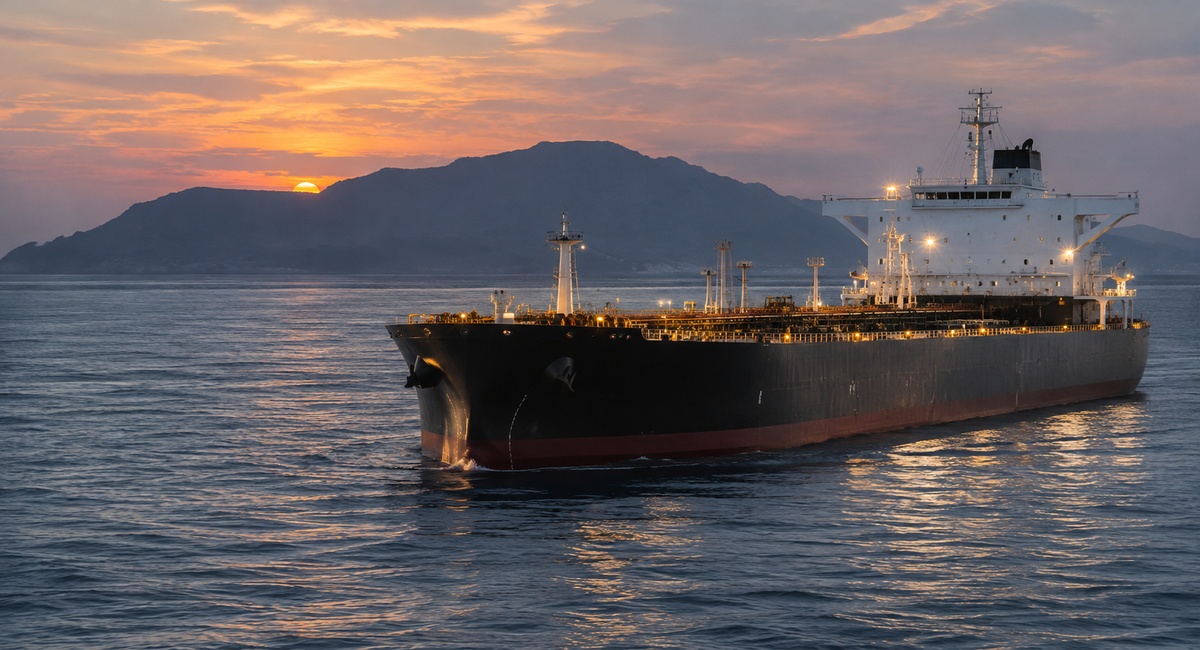
US forces struck Qeshm Island, off the Iranian coast, on Monday night, hours after Vice President JD Vance said he was hopeful for a diplomatic solution, according to reports citing US officials who described the strikes as defensive. Al Jazeera described it as the first US attack on the island since June.
Oil had already fallen more than 7% on Monday on diplomacy signals. WTI settled at $96.46, down 7.4% and its biggest daily loss since July 27, and Brent settled at $104.77, CNBC reported. On Tuesday WTI rose about 1.75% to $98.15 and Brent about 2% to nearly $107, The National reported.
How a Limited Strike Reaches the Bank of Canada
The chain has four links. A strike at the mouth of the Strait of Hormuz revives supply risk. That lifts crude and gasoline. Gasoline lifts headline inflation: Canadian CPI was 3.1% in September, while inflation excluding gasoline was 2.2%. The Bank of Canada then has to weigh it, and its October report projects headline inflation near 3.4% by the end of 2026.
Desjardins calls higher-for-longer oil prices the main driver of that revision. The Bank said on October 28 that it will proceed carefully, one meeting at a time, which makes the December 9 decision sensitive to a barrel price set in the Gulf.
What the October Rally Priced In
WTI climbed from a closing low of $88.28 on October 7 to a high of $103.27 on October 23, a 17.0% gain in 12 sessions, before easing to $101.47 on October 27.
Front-month WTI futures close, September 28 to October 27, 2026. WTI settled at $96.46 on November 2, down 7.4% on the day, after diplomacy signals from Washington and Tehran. Source: Investing.com; CNBC.
Goldman Sachs estimates in an investor note that a geopolitical risk premium of about $27 a barrel explains most of the October crude rally, and raised its year-end Brent forecast to $105 from $90, citing the risk of escalation after the midterms, Euronews reported. Brent briefly touched $118 in October.
A premium is the price of a possibility, so it can leave as quickly as it arrived, which is what Monday showed. Ipek Ozkardeskaya, senior analyst at Swissquote, said the midterms cannot by themselves reopen shipping routes, and described credible de-escalation as the clearest downside risk for crude and renewed disruption as the clearest upside risk.
Base Case and Tail Risk
The base case is continued indirect diplomacy punctuated by limited strikes. Qatari mediators travelled to Tehran on Monday night to discuss a draft deal with Foreign Minister Abbas Araghchi, who has said the strait could reopen within two days if Washington meets a set of conditions. Euronews reported that those include an end to the US naval blockade of Iranian ports, lifted sanctions on oil exports and a halt to fighting on all fronts. The Iranian delegation left Doha on Sunday, and a draft proposal is still circulating.
The tail risk is a full resumption of strikes after the vote today. Trump told Axios he was in no rush, saying "One way or the other, we will do something, but there is no rush," and Axios reported that Benjamin Netanyahu urged him on Saturday to resume strikes immediately after the midterms. That is the scenario behind the higher Goldman forecast, and the one in which the premium rebuilds toward the October high.