
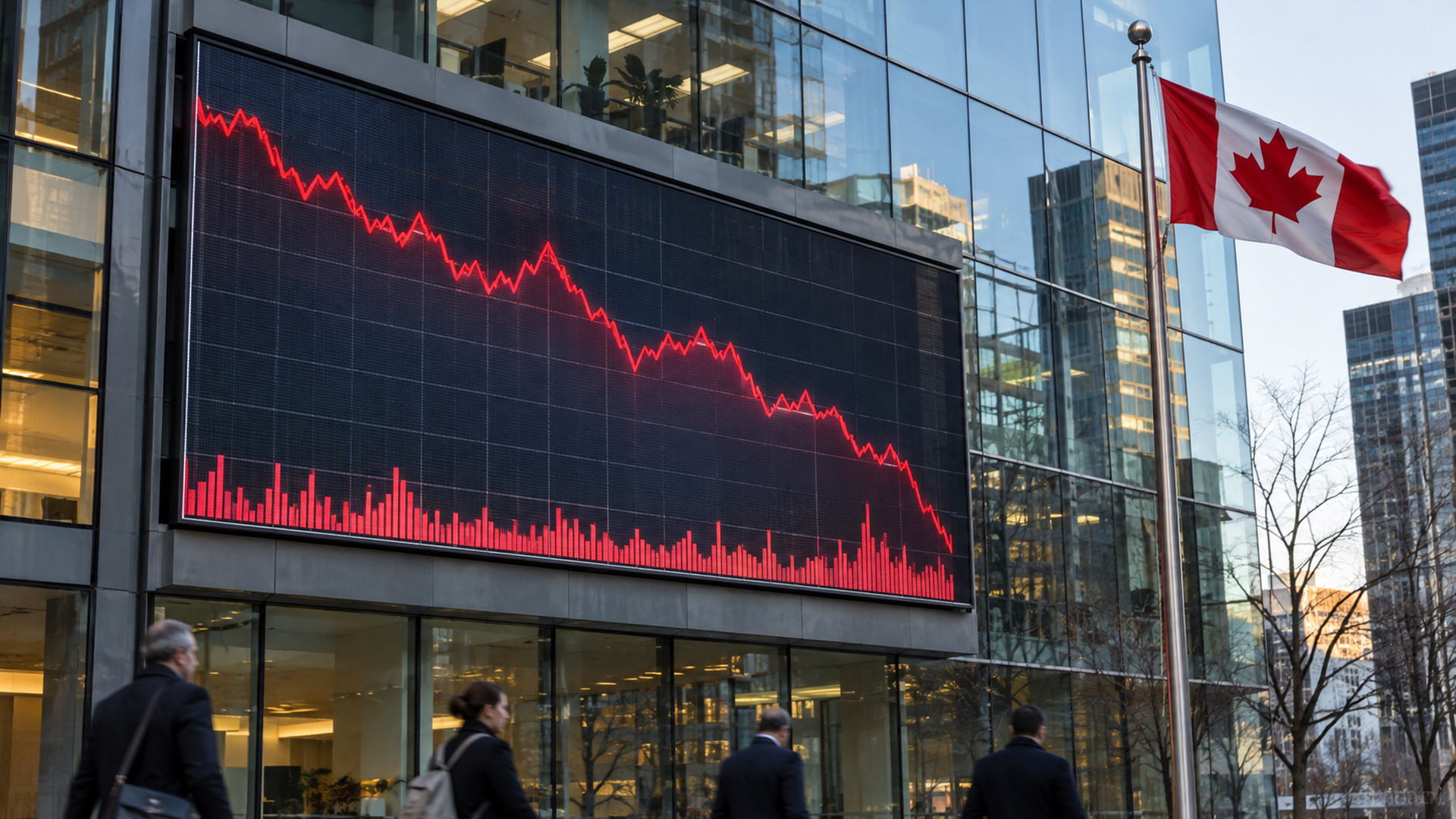
Canada’s benchmark equity index lost 736.13 points on November 5, finishing at 35,605.27 and surrendering most of Wednesday’s election-relief rally. The S&P/TSX Composite fell approximately 2.03%, its steepest daily decline since June 5. Across the border, the S&P 500 declined 4.36%, the Nasdaq Composite lost 5.52%, and the Dow Jones Industrial Average fell 3.44%. The U.S. selloff wiped roughly $3 trillion from S&P 500 companies’ market value, according to Reuters.
The immediate story was a reassessment of artificial-intelligence infrastructure spending. Democratic election victories, including in areas where new data centres face local opposition, raised concerns that regulations and approvals could slow the pace of construction. Chipmakers and companies supplying power or equipment to data centres sold off sharply. That is a change to growth expectations, not evidence that existing AI demand has suddenly disappeared.
Toronto Could Not Rely on Its Usual Offsets
The Toronto technology sector fell 3.8%, and Celestica lost 12.7%. Heavily weighted financials declined 3.2%, with Sun Life down 10.2% despite results that beat analysts’ earnings estimates. Consumer discretionary dropped 2.9%, industrials lost 1.9%, and Gildan Activewear fell 18.9% following weaker-than-expected quarterly results. The selloff was not confined to one sector.
The commodity relationship was more revealing. U.S. crude futures rose 2.72% to $90.52 as new tanker attacks added risk to Gulf supply, yet the TSX energy sector declined 2.5%. Canadian Natural Resources beat third-quarter profit expectations but its shares fell 1%. An equity price reflects expected cash flows, valuation, financing and general risk appetite; it need not track a commodity benchmark session by session.
Percentage changes on Nov. 5. The TSX value is calculated from the reported 736.13-point change and 35,605.27 close; U.S. benchmark changes are Reuters reported figures.
This Was a Valuation and Duration Shock, Not Only a Political Story
The Nasdaq’s November 5 decline was its worst daily performance in 19 months, and the index entered correction territory, more than 10% below its October 6 record close. Nvidia fell over 9%; the Philadelphia semiconductor index lost more than 12%. For businesses whose value depends heavily on profits expected far into the future, a small change in assumed growth, regulation or capital costs can produce a disproportionate change in present valuation.
The Bank of England also raised its policy rate to 4% on November 5, while the Bank of Canada had lifted its overnight rate to 2.5% the previous week. There is no single mechanical link from those decisions to Thursday’s AI selloff. They do, however, reinforce a market environment in which discount rates, financing conditions and long-duration growth expectations require closer attention.
The Budget Arrived After Toronto’s Closing Bell
Finance Minister François-Philippe Champagne’s Budget 2026 was presented after the Toronto market close. That timing matters: Thursday’s TSX closing value cannot be described as an equity-market verdict on details that investors had not yet received. The budget includes investment incentives and a projected $62.3 billion current-year deficit. Its actual market reception belongs to subsequent trading, not to the November 5 close.
For advisors, the most useful decomposition is by source of risk. Assess technology concentration and AI-linked suppliers separately from Canadian banks, energy producers and diversified global equities. Review whether a client has enough liquidity to avoid unwanted selling during declines. And treat the next employment report, due after this edition’s 7:45 a.m. cutoff, as an upcoming data point rather than as a fact already priced with certainty.
The market’s message is not that every asset is equally vulnerable. It is that correlations can rise abruptly when investors reassess an expensive growth narrative, and a commodity gain is not guaranteed to offset an equity decline on the same day.