
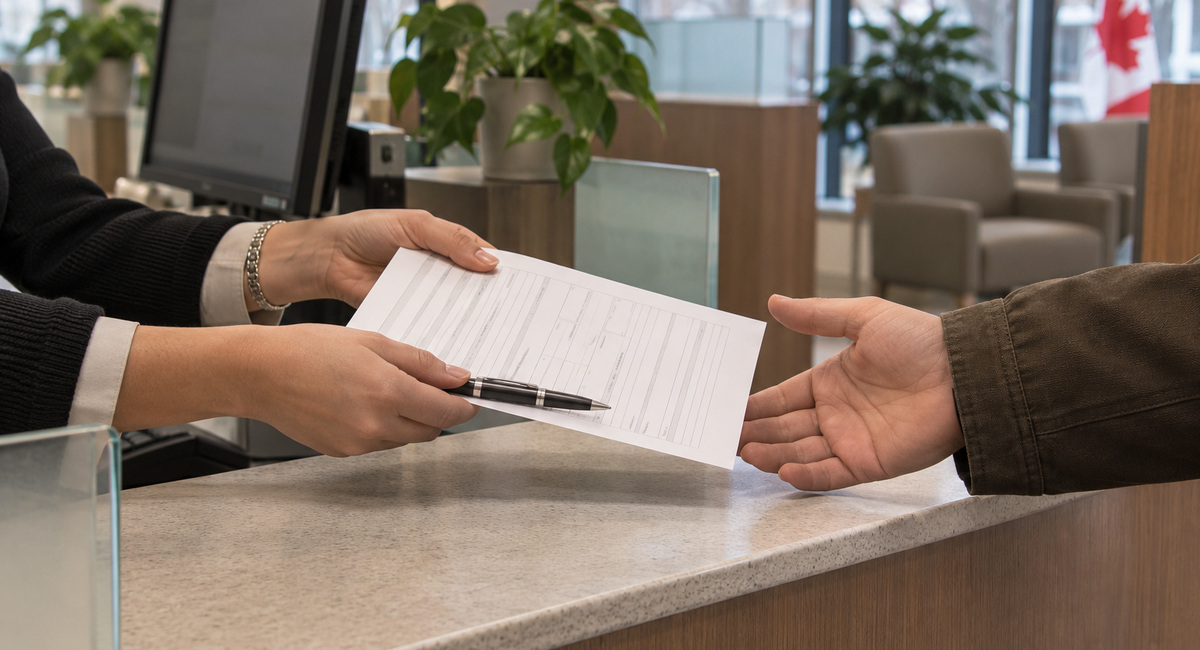
A year-end question with two different transactions
A Canadian household moving money between tax-free savings accounts this month has two decisions to make. One is where the money should be held. The other is how to get it there. The second decision can change the client's contribution room, even when the account balance looks identical at the end of the move.
The Canada Revenue Agency sets the 2026 annual TFSA dollar limit at $7,000. Adding the published limits from the program's launch in 2009 through 2026 produces $109,000. That sum applies to the annual limits for someone eligible throughout. Individual room can be higher or lower because of prior contributions, withdrawals, age and residency. A client moving funds between two accounts should start with their own records at both issuers.
The schedule shows the amount added for each year of eligibility. Actual room depends on personal contribution and withdrawal history.
Let the receiving institution handle a move between issuers
The CRA directs clients moving assets from one TFSA to another to ask the receiving financial institution to arrange a direct transfer. The transferred funds do not use contribution room. Depending on what both institutions support, the transfer can be in cash, in kind or partial. An in-kind transfer may preserve the investment position where the receiving issuer can hold it. A cash transfer requires selling the holdings first, and the client should ask how long the funds may be out of the market and whether there are fees.
The alternative of withdrawing from one account and depositing at another creates two separate events. A withdrawal increases available room in the next calendar year. The deposit uses the room available on the day the contribution is made. If the deposit creates an excess, the CRA generally applies a tax of 1% per month to the excess amount under its monthly calculation rules.
For example, consider a client with zero remaining 2026 room who withdraws $12,000 this December and deposits $12,000 in a second TFSA the same month. The new deposit creates a $12,000 excess, which generally implies $120 of excess tax for December if that is the highest excess during the month. A properly processed direct transfer would have kept the $12,000 inside the TFSA system throughout.
Start with the purpose of the withdrawal
A client who genuinely needs the money outside the account has a different choice. If a withdrawal posts in December, the room generally returns at the start of January. If it posts in January, the room generally returns at the start of the following calendar year. That difference can matter to someone who expects a bonus or the proceeds of another transaction and wants to refill the account. The issuer's processing date deserves confirmation before making commitments around the funds.
For an adviser, the first step is to reconcile all TFSA transactions across institutions, including automatic contributions. The CRA advises clients to calculate their room from their own records because issuer reporting reaches the agency after the calendar year. With those records in hand, the client can decide which assets are moving, whether cash must leave the TFSA, and which date needs to be confirmed. Those three answers are enough to turn a general year-end discussion into a transaction the household can track.