
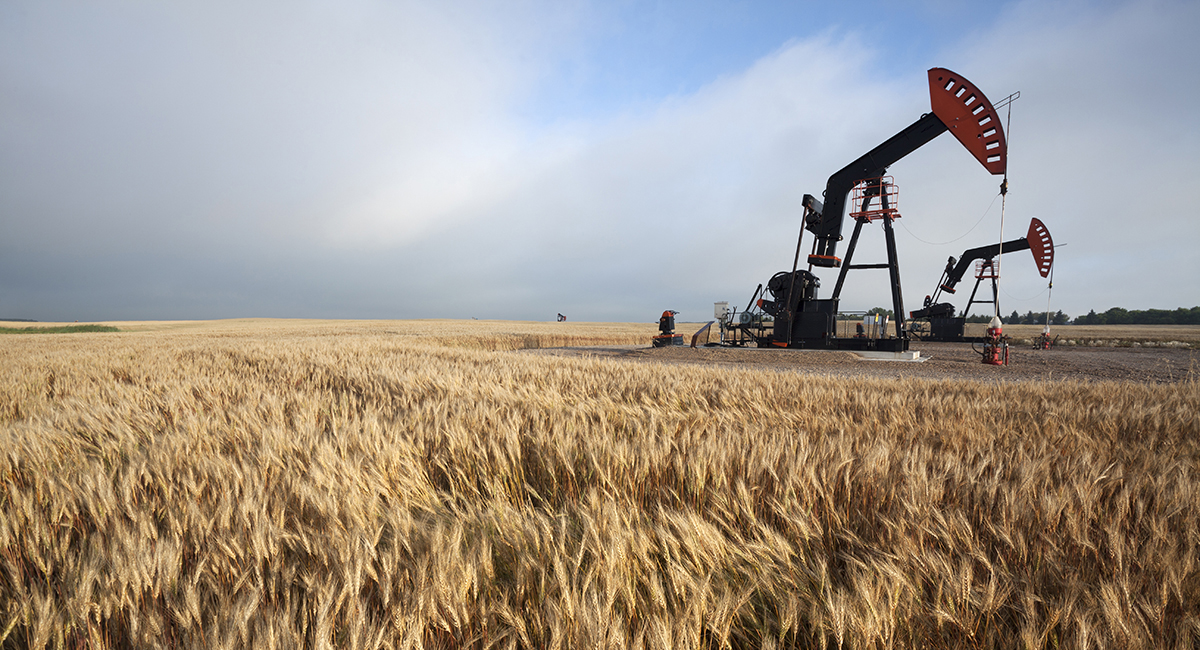
The TSX composite closed Wednesday near 34,305, down approximately 106 points or 0.3%, in a session that illustrated the structural divide defining Canadian equities since the Hormuz conflict began. Energy names held as WTI crude traded near $88 to $89 per barrel following the second consecutive day of US military strikes on Iran. Base metals, technology, and rate-sensitive financials declined as the Bank of Canada's press conference introduced "consecutive hikes" language that the market had not expected in such direct terms.
The split is not new. Since late February, the TSX has been effectively two markets trading in the same index. The energy sub-index has significantly outperformed the composite, supported by oil prices running 20% above pre-conflict levels. Everything else, financials constrained by rate uncertainty, materials exposed to global growth risk from tariff disruption, technology facing valuation pressure from elevated bond yields, has underperformed or moved sideways. Wednesday's session compressed that dynamic into a single day.
The BoC Press Conference and Its Market Effect
The Bank of Canada's hold at 2.25% was fully priced before the announcement. What was not fully priced was the specific language Governor Macklem used at the 10:30 AM press conference. His statement that monetary policy may need "consecutive increases" if energy-driven inflation spreads into broader prices landed on rate-sensitive sectors with immediate force.
Canadian bank stocks, which had been stable through the morning, slipped as bond yields moved modestly higher in response to the hike language. Utilities, which carry significant rate sensitivity through their capital structures, underperformed. The five-year Government of Canada bond yield, which drives fixed mortgage rates and represents the discount rate for rate-sensitive equities, edged up after the press conference as markets priced a slightly higher probability of a hike before year-end. CIBC economist Andrew Grantham noted that the "consecutive" language plays into market perceptions that the Bank is more worried about upside inflation risks than downside growth risks, a framing that is modestly negative for rate-sensitive equity sectors.
The irony is that the hold itself, the fifth consecutive decision to leave rates unchanged, should have been marginally supportive for rate-sensitive names. The language surrounding the hold negated that support. Macklem's candour about the policy dilemma, which the Economy Desk covered separately today, translated directly into equity market uncertainty about the direction of the next move.
The TSX composite reached an all-time high of 34,544 on April 27, driven by energy sector re-rating on elevated WTI crude, then consolidated as ceasefire optimism partially unwound the oil premium; the June 10 session closed at 34,305, down 106 points, as BoC two-way risk language weighed on rate-sensitive sectors and the re-escalation of US-Iran hostilities kept energy names supported but not advancing.
Energy Sector Divergence: Suncor, CNQ, and the Integrated Advantage
Within the energy sector, Wednesday's session highlighted a performance divergence between integrated producers and pure-play upstream names. Suncor, which posted Q1 net income of C$2.1 billion against C$1.7 billion a year earlier, has returned approximately 98% over the past 12 months. CNQ has returned approximately 59% over the same period, also strong but demonstrably lower than Suncor's integrated-model performance. The divergence reflects Suncor's downstream refining and retail operations, which benefit from elevated crack spreads as refined product prices track oil prices while feed costs are partially hedged through its own production.
Canadian oil sands producers carry a structural advantage in the current conflict that is worth stating clearly for client conversations: their production does not pass through the Strait of Hormuz. The conflict supports their revenue through the global WTI benchmark price while their physical supply chain is insulated from the direct disruption. The Trans Mountain Pipeline expansion, completed in 2024, has further diversified their export channels toward Pacific Basin buyers. That structural position is distinct from Middle Eastern producers and from global integrated majors with significant Gulf exposure.
US Markets and the Canadian Read-Through
US equity markets fell sharply on Wednesday. The Dow Jones Industrial Average dropped approximately 509 points to close near 50,363. The S&P 500 lost roughly 52 points to close near 7,335. The Nasdaq fell approximately 275 points. The US declines reflected two simultaneous pressures: inflation data and the Hormuz re-escalation. US household inflation has been pushed above 4% by higher energy prices, according to AP reporting, creating a Federal Reserve dilemma that mirrors the Bank of Canada's own policy bind.
For Canadian portfolios, the US market weakness carries a specific read-through. Canadian equities have a structural correlation to US markets through overlapping capital flows, currency dynamics, and export dependency. When the S&P 500 falls 0.7%, the TSX typically moves in the same direction. Wednesday's relative TSX outperformance, down only 0.3% against the S&P 500's 0.7% decline, reflects the energy sector buffer that Canadian investors hold through the TSX's 16% energy weight. That buffer is real, but it is not permanent. If WTI retreats toward $75 on a ceasefire, the TSX loses its relative insulation and reverts to normal correlation with US markets at a time when US markets face their own growth and inflation headwinds.
CAD/USD and the Currency Overlay
The Canadian dollar has traded in a range that reflects the competing forces of elevated oil prices, which support CAD, and tariff-driven economic weakness, which pressures it. Higher WTI is structurally positive for the Canadian dollar through the terms-of-trade channel. The Bank of Canada's hold, removing near-term rate cut expectations, provides a modest additional support. Against those tailwinds, the tariff uncertainty and the Bank's characterization of the Canadian economy as "weak" weigh on the currency. The net result has been a CAD that has not fully captured the oil price upside, a dynamic that professional currency managers have noted as a potential mean-reversion opportunity if the conflict sustains current oil levels through the summer.