
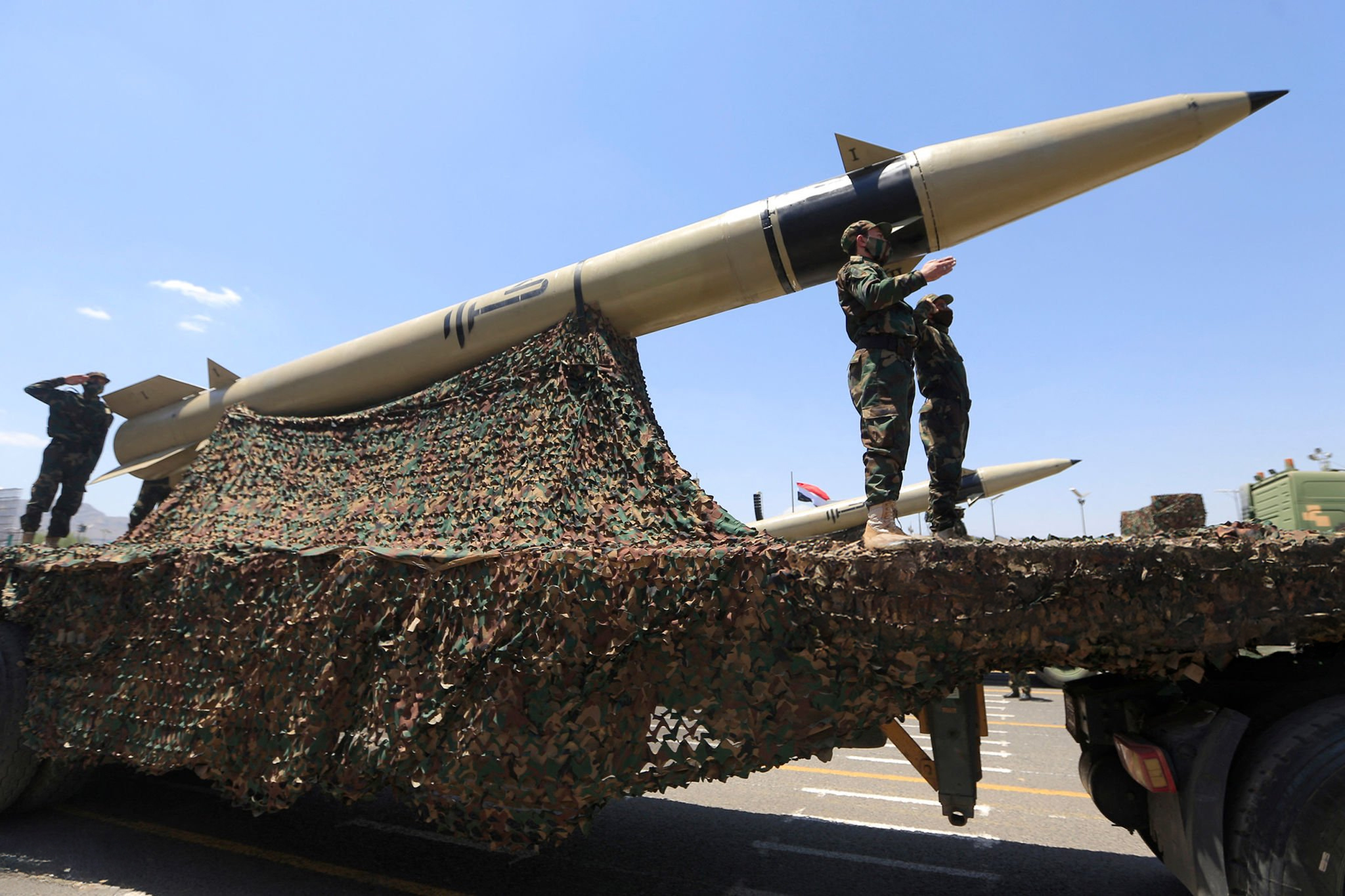
Yemen's Houthi rebels struck Saudi Aramco's refining complexes at Jizan and Yanbu before dawn Saturday, the first direct attack on Saudi oil infrastructure in four years. NASA's satellite fire detection system logged multiple thermal anomalies at Jizan within hours. The strike marks a genuine widening of this conflict: for five months the fighting has centred on Iran, the Strait of Hormuz, and shipping traffic through it. Saturday's attack put Saudi Arabia's own production infrastructure directly in the blast radius for the first time since 2022.
By Monday morning, WTI crude had fallen more than seven per cent to about $83.50 a barrel. The reason was not the refinery strike. It was a pause in United States strikes on Iran that began late Friday night without a formal announcement, matched by a reported halt from Tehran. The two facts sit in tension, and the size of that tension is itself the story.
The Mechanism That Connects a Saudi Refinery to the TSX
The connection between this weekend's events and Canadian portfolios runs through relative volume, not headlines. The Strait of Hormuz carried about 20.9 million barrels of crude and petroleum liquids a day in normal conditions through the first half of 2025, according to the US Energy Information Administration. The Bab el-Mandeb corridor that feeds the Red Sea route the Houthis targeted carried roughly 8.6 million barrels a day over the same period, a little more than a third the size. A pause that credibly touches the Hormuz flow therefore has more than double the structural weight of an attack on the smaller route, even when the attack is more dramatic and the pause is not announced at all.
That volume gap is why Canadian energy names, the TSX composite, and the Canadian dollar all moved on this morning's oil price, not on Saturday's strike. The TSX's energy weighting means a Hormuz-driven repricing carries more force through the index than a Red Sea event, whichever direction either one points.
Figures show normal pre-disruption transit volumes for comparison. Actual Hormuz flow fell to about 14.6 million barrels a day in the first quarter of 2026 due to the conflict, per EIA tracking.
Why the Market May Be Right to Treat This as the Base Case
Saudi Arabia has structural options that Iran does not. The kingdom has been routing crude around the core disruption through its East-West pipeline to the Red Sea port of Yanbu, the same terminal Saturday's strike hit, and satellite intelligence firm Windward reported Saudi Arabia has also begun offering crude from an Egyptian port as a further bypass. Iran has no comparable alternative to the Strait of Hormuz. That asymmetry is the base case argument for why a US-Iran pause matters more than a Houthi strike on a route Saudi Arabia can partly route around.
Zero tankers crossed the Strait of Hormuz in the 24 hours to July 25, according to Windward's tracking, underscoring how tightly the primary chokepoint remains constrained even amid talk of a pause. If the pause holds and that flow begins to normalize, the improvement in absolute barrel terms would dwarf whatever the Houthi campaign can take away through the smaller Red Sea corridor.
The Tail Risk the Market Isn't Fully Pricing
Every prior pause in this conflict has eventually broken. An April ceasefire lasted roughly two weeks before strikes resumed. A June memorandum of understanding on Hormuz traffic had unravelled by mid-July. That pattern argues against treating Monday's quiet signal as resolved, whatever the price action suggests.
The Houthi campaign adds a genuinely new variable rather than a repeat of an old one. President Trump has already threatened "major military punishment" against the Houthis over Red Sea attacks, and US forces used disabling fire against a sanctioned tanker attempting to run the blockade near Hormuz on July 24, the first confirmed action of its kind. A second theatre that draws renewed US military involvement, even while the Iran channel holds, is the scenario the market's current pricing does not appear to reflect. That is a tail risk worth flagging, not a base case worth trading on.