
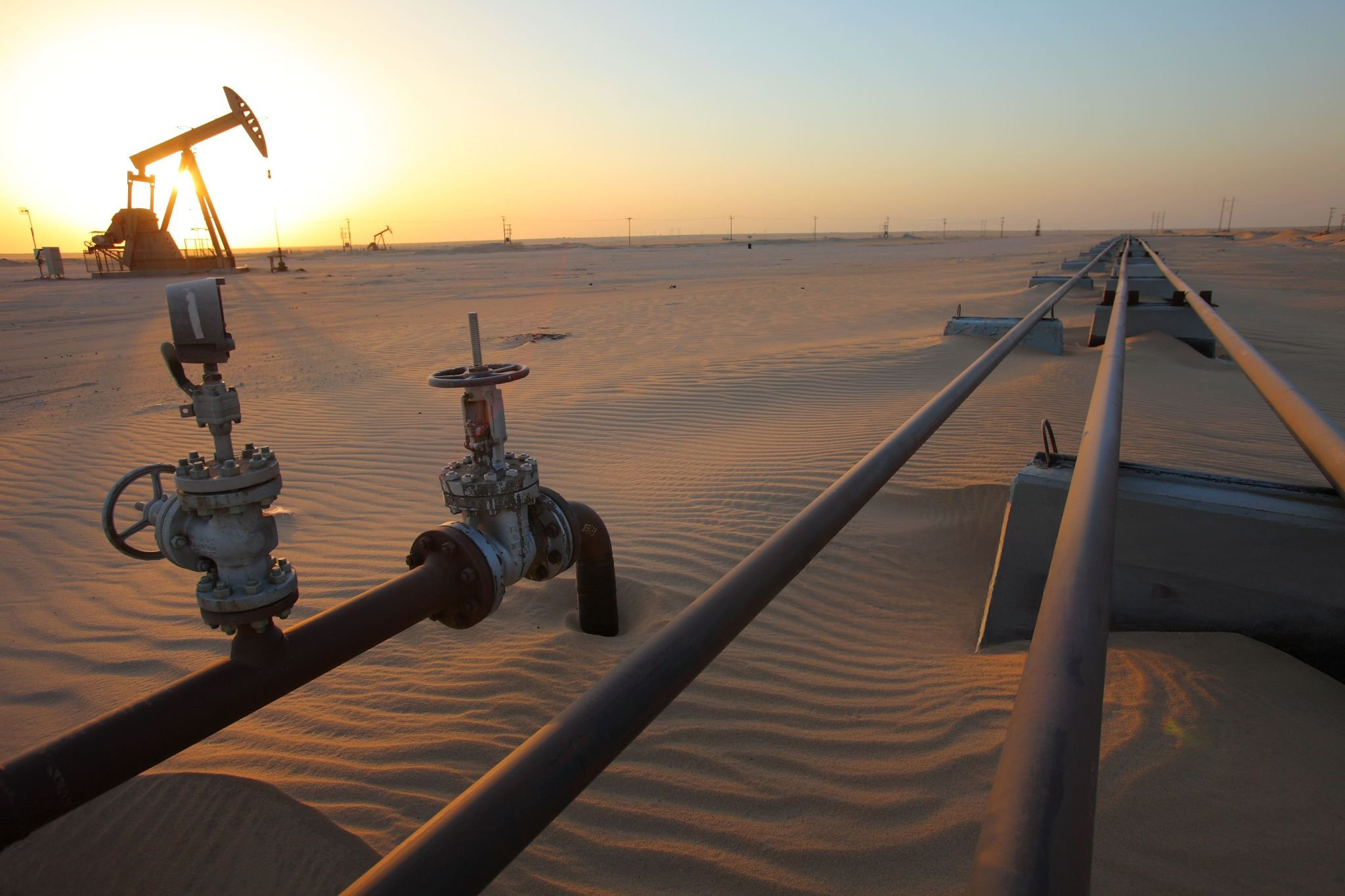
WTI crude fell more than seven per cent to about $83.50 a barrel in early Monday trading, the sharpest single session move in weeks. The trigger was not a supply event. It was the absence of one: the United States quietly paused its bombing campaign against Iran late Friday night, and Tehran reportedly reciprocated, removing the newest layer of war premium from a market that had priced oil up nearly 40% in July alone.
Almost every other major asset moved the same direction for the opposite reason. S&P 500 futures pointed 0.9% higher, Nasdaq futures gained 1.5%, Dow futures added 0.8%, gold rose about one per cent to $4,092, and silver climbed 2.5%. A de-escalation signal that strips war premium out of oil is, by the same logic, bullish for risk assets broadly and for the inflation outlook that has been pressuring bond yields and rate expectations since February.
Energy Names Face the Session's Steepest Test
The TSX Composite closed Friday at 35,369.10, up 0.5% on strength in real estate and financials, even as energy names already lagged: Canadian Natural fell 1.1% and Suncor slipped 0.7% as the oil rally paused ahead of the weekend, while Cenovus fell 1.4% heading into its earnings release this Wednesday. Monday's much larger oil move raises the stakes on that divergence considerably. A TSX energy sector that has carried five months of war-driven gains now opens against a seven per cent single session move in the commodity underneath it.
The index has not moved in lockstep with oil in either direction this month. Thursday, the TSX fell 0.82% to 35,193 despite WTI jumping to $92.19 on the Red Sea tanker strikes, as weakness in mining, technology, and financial shares overwhelmed the energy sector's gains. The same dynamic can cut the other way: a sharp oil decline does not guarantee a weak TSX session if strength in rate-sensitive financials and real estate offsets it, as Friday's session showed on a smaller scale.
Equity index figures reflect futures pricing ahead of the North American open. TSX Composite reflects Friday's confirmed close pending Monday's session.
Why Bonds and the Loonie Aren't Playing Along the Same Way
The Government of Canada 10 year yield eased to about 3.61%, down from an over one month high near 3.66% set July 23, as softer energy driven inflation expectations work through the bond market ahead of Wednesday's Bank of Canada deliberations summary. That move is consistent with the broader risk rally: lower expected inflation supports bond prices even as it supports equities.
USD/CAD is the outlier. The pair is up just 0.05% to about 1.4100, a strikingly muted reaction given the scale of the oil move. Canada's dollar typically weakens alongside falling oil prices on the standard petrocurrency relationship, but a broadly softer US dollar this morning, with the DXY index down about 0.3%, appears to be offsetting that pressure. The same decoupling showed up July 13, when the loonie held roughly steady despite a nine per cent single session jump in WTI, suggesting the usual oil-CAD relationship has been unusually loose through this entire conflict.
What's Ahead Before the Next Signal
European equity markets were pointed toward a higher open Monday, and Asian markets traded broadly higher overnight on the same easing energy backdrop, with India's Sensex specifically citing lower oil prices as a tailwind. Cenovus reports second quarter earnings Wednesday, the same day the Federal Reserve announces its rate decision and the Bank of Canada releases its deliberations summary from the July 15 hold. Until then, Monday's session is a test of how much of the TSX's energy sector strength this year can absorb a single seven per cent reversal in the commodity that built it.