
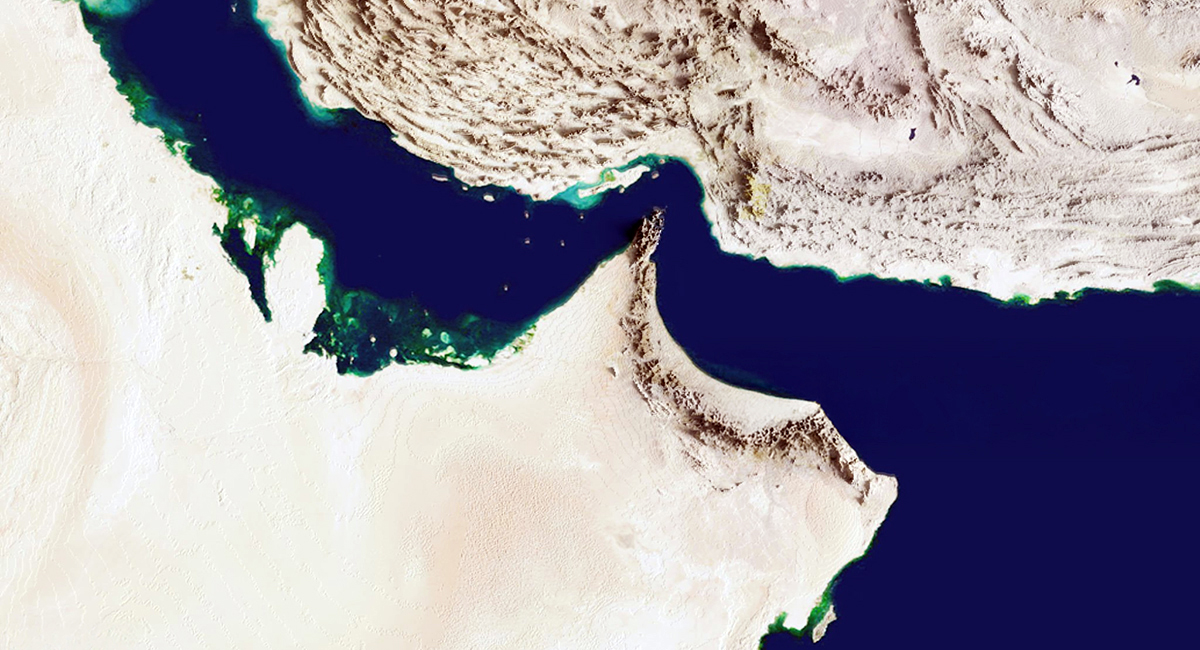
US Central Command confirmed Sunday it struck two Iranian rocket launchers on Larak Island in the Strait of Hormuz, the first American strike on Iranian territory in more than a month. The stated target was preparation to launch rockets carrying naval mines into the strait, which Central Command called an imminent threat. Iran's Revolutionary Guard responded with ballistic missile strikes on two US bases in Jordan, King Hussein and Al Azraq, and the UAE reported intercepting a drone approaching its territorial waters. The exchange marks the war's most active weekend since late July, seven months after the conflict began.
Why Oil Moved and Gold Did Not
The mechanism runs directly through shipping risk, not general war anxiety. WTI crude rose more than 3% Monday morning to above $86 a barrel, and Brent climbed past $91. Gold, the asset that typically absorbs a broad flight-to-safety bid during military escalation, was essentially unchanged. That divergence is the actual signal in Monday's price action: the market is treating this as a specific threat to Hormuz shipping capacity, not as a generalized deterioration in global risk. A true broad-based escalation would have moved both. Only one moved.
Oil and the dollar index moved on the Larak Island strikes Monday morning; gold and the 10-year Treasury, the assets that typically absorb a broad risk-off bid, barely reacted.
The Tail Risk Versus the Base Case
The base case remains that this is contained, similar to the isolated flare-ups the war has produced roughly monthly since February. Washington has spent recent weeks shifting toward economic pressure on Iran rather than sustained military escalation, and the June memorandum of understanding between Iran and Oman on a Hormuz revenue-sharing framework, while not fully honoured, has kept a diplomatic channel technically open. Crude had actually fallen nearly 5% over the week ending Friday as traders read the Iran situation as a sanctions confrontation rather than a supply threat. This weekend's exchange does not erase that read on its own.
The tail risk is that Sunday's strike breaks the pattern rather than repeating it. Every prior exchange since February has stayed below the threshold of direct American strikes on Iranian territory. This is the first time that threshold has been crossed since late July, and Tehran's Foreign Ministry has said it will respond decisively to any further aggression. If the exchange escalates rather than settling within days, the shipping-capacity mechanism this week's move is pricing becomes a sustained one rather than a one-session repricing.
The Canadian Portfolio Mechanism
Canadian energy producers and the loonie carry this exposure directly, and through a channel distinct from the war narrative generally. Canadian Natural Resources, Suncor and Imperial Oil all declined in Friday's session on the week's de-escalation read; a sustained reversal of that read is a direct tailwind for the same names. The Canadian dollar, which draws support from oil prices as the largest crude exporter to the US, gained modestly against a broadly softer US dollar Monday morning, with USD/CAD pulling back from a two-week high near 1.3915.
The Bank of Canada's own inflation calculus runs through the same channel. Gasoline-driven CPI acceleration was the dominant story in Canadian inflation data from March through May this year, before easing back through the summer as Hormuz flows partially normalized. A sustained reversal of that normalization reopens an input the Bank had started to treat as resolving, two days before its September 2 rate decision.